

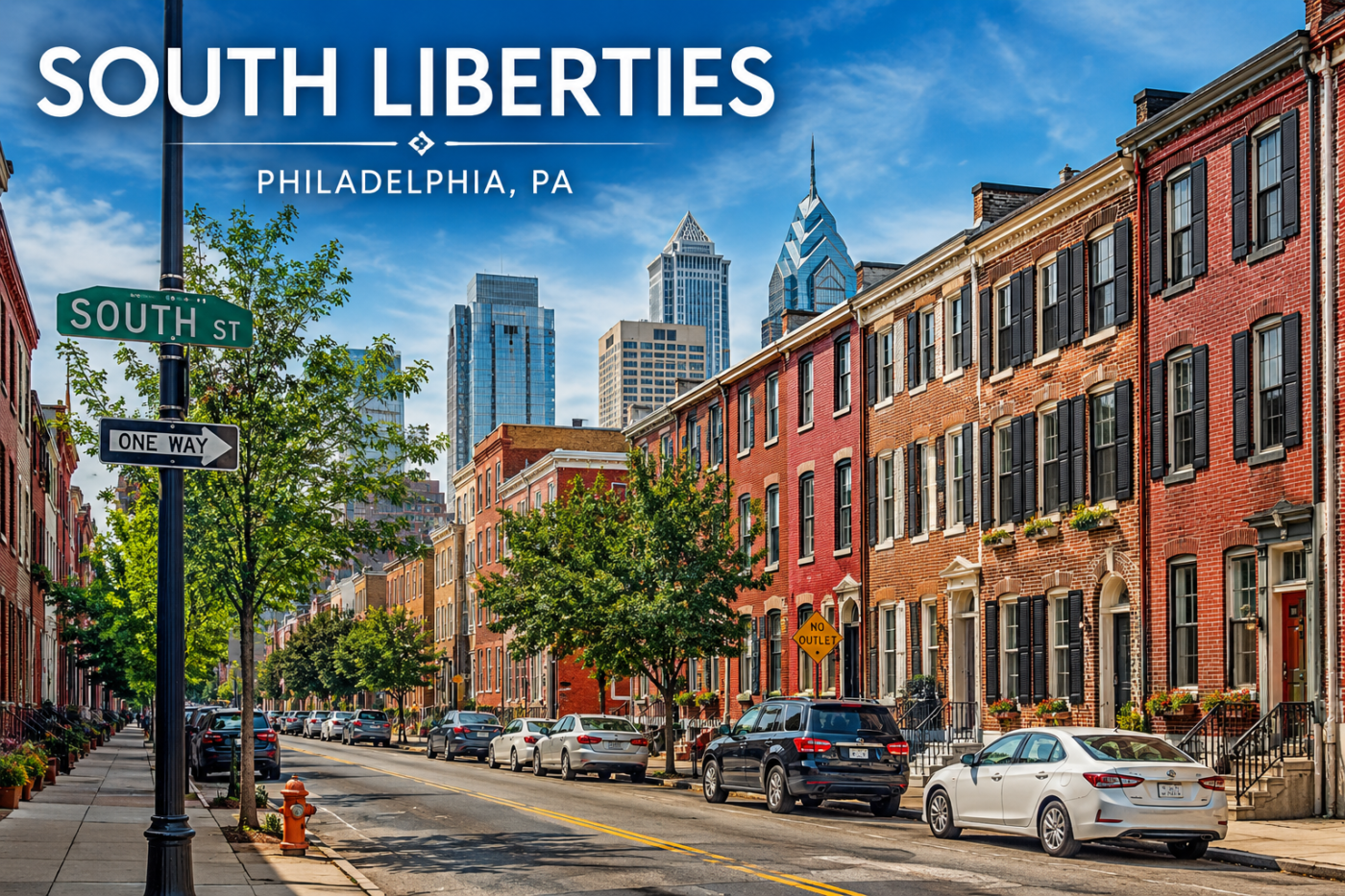

South Liberties is a name that carries a strong connection to Philadelphia’s history, neighborhoods, and changing urban landscape. Although the term can sound like a reference to a single, clearly defined district, its meaning is more nuanced. It is associated with the historic South Liberties area of Philadelphia, a section south of the original city that developed as the city expanded beyond its earliest boundaries.
Today, interest in South Liberties reflects a broader fascination with Philadelphia’s historic neighborhoods and the way old communities evolve over time. Streets, institutions, industries, residences, and transportation routes have all helped shape the area. Understanding its past provides useful context for understanding Philadelphia itself.
What Does South Liberties Mean?
South Liberties was historically associated with land located outside Philadelphia’s original city limits. The term “liberties” referred to areas surrounding the city that were established for expansion and settlement. Philadelphia originally had a compact urban core, while surrounding lands gradually developed into distinct communities.
The South Liberties were located south of the central city. As Philadelphia grew, these areas became increasingly connected to the urban economy. Farmers, craftsmen, laborers, merchants, and other residents contributed to the development of communities beyond the original city boundaries.
Over time, the distinction between the central city and surrounding liberties became less obvious. Urban growth connected formerly separate settlements through streets, markets, businesses, and public transportation.
The Meaning of “Liberties” in Philadelphia
The word “liberties” has an important historical meaning. It did not primarily describe political freedom. Instead, it referred to land surrounding the original city where development could take place.
Philadelphia’s planned beginnings made this arrangement especially significant. William Penn’s original city plan envisioned a structured urban environment, but population growth eventually pushed development beyond the initial boundaries.
The surrounding liberties became important parts of Philadelphia’s expansion. South Liberties was one of these areas, helping create a bridge between the original city and the communities developing farther south.
The Historical Development of South Liberties
The history of South Liberties is closely connected to Philadelphia’s transformation from a small colonial settlement into a major American city.
During the colonial period, areas outside the central city were less densely developed. Agriculture and small-scale settlement remained important. As Philadelphia’s population increased, however, residential and commercial development moved outward.
The southern part of the city benefited from its proximity to the Delaware River and established transportation routes. Water access supported commerce, while roads connected growing communities with Philadelphia’s central markets.
From Rural Land to Urban Community
One of the most important changes was the gradual conversion of open land into developed neighborhoods. Houses appeared alongside workshops, stores, public buildings, and other facilities.
This transition did not happen overnight. Instead, it occurred through generations of investment and population growth. Families moved into the area, businesses opened, and streets became more heavily used.
The result was an increasingly urban landscape that eventually became integrated with Philadelphia proper.
South Liberties and Philadelphia’s Growth
Philadelphia experienced major population and industrial growth during the eighteenth and nineteenth centuries. The southern districts played a meaningful role in that transformation.
Industries and businesses needed access to transportation, workers, customers, and markets. Locations near the Delaware River offered advantages for trade and manufacturing. As a result, southern Philadelphia became increasingly active economically.
The growth of nearby neighborhoods also influenced South Liberties. Communities were rarely isolated from one another. People traveled between districts for work, shopping, education, worship, and social activities.
This interconnectedness helped transform the liberties from peripheral areas into important components of the expanding city.
Architecture and the Urban Landscape
Philadelphia is widely recognized for its historic architecture, and the South Liberties area forms part of that broader architectural story.
Older Philadelphia neighborhoods often feature brick row houses, narrow streets, historic commercial buildings, churches, and structures reflecting different periods of urban development. Although individual buildings have changed or disappeared, surviving architecture can reveal how residents lived and worked in earlier generations.
Row Houses and Residential Development
The Philadelphia row house became one of the defining features of the city’s residential landscape. Attached homes allowed developers to accommodate growing populations efficiently while maintaining relatively compact streets.
Residential architecture also reflected economic differences. Some houses were modest and practical, while others featured more elaborate façades and interior details.
Walking through historic parts of South Philadelphia can therefore provide clues about the area’s social and economic history.
Industrial Architecture
Industrialization added another layer to the urban landscape. Warehouses, workshops, factories, and commercial structures appeared alongside residential properties.
This mixture of homes and workplaces was common in nineteenth-century Philadelphia. Residents could live relatively close to employment, while businesses benefited from nearby labor and transportation networks.
The Role of Transportation
Transportation played a major role in Philadelphia’s development. Streets and roads connected South Liberties with the central city and neighboring communities, while river access supported commerce.
As Philadelphia expanded, improvements in transportation made it easier for people and goods to move across the city.
Public transportation later changed daily life even further. Streetcars and other forms of urban transit allowed workers to travel greater distances and encouraged development beyond the most densely populated areas.
Connecting the Neighborhoods
Transportation did more than move people. It helped create economic relationships between neighborhoods.
A shopkeeper could serve customers from surrounding communities. Workers could commute to factories or businesses. Markets could receive goods from farther away.
These connections gradually weakened the practical distinction between the original city and its surrounding liberties.
South Liberties in the Context of South Philadelphia
When discussing South Liberties today, it is useful to place the historical term within the larger geography of South Philadelphia.
Modern Philadelphia contains neighborhoods whose names, boundaries, and identities have changed considerably over time. Historical terminology does not always match contemporary neighborhood maps.
That distinction matters because someone researching South Liberties may encounter references that use the term differently depending on the historical period being discussed.
Why Historical Boundaries Can Be Confusing
Neighborhood boundaries are rarely permanent. Streets may become dividing lines, municipal boundaries can change, and residents may adopt different names for the same general area.
Historical sources can therefore describe South Liberties in ways that do not perfectly correspond with modern maps.
Researchers should consider the date of a source when interpreting references to the area. A map from the eighteenth century may describe Philadelphia very differently from a modern neighborhood guide.
Cultural and Community Heritage
The importance of South Liberties extends beyond maps and buildings. The area reflects Philadelphia’s long history of immigration, commerce, religion, family life, and community organization.
Philadelphia attracted people from many backgrounds, creating diverse urban communities. Churches, schools, markets, clubs, businesses, and neighborhood organizations helped residents establish strong local identities.
This social history is essential because cities are shaped by people as much as by physical structures.
Why South Liberties Still Matters
Historical places remain valuable because they help explain how modern cities developed. South Liberties illustrates a recurring pattern in urban history: peripheral land becomes residential space, communities grow, transportation improves, and formerly separate areas become integrated into a larger city.
Studying this process can help explain why Philadelphia has such a distinctive neighborhood structure.
It also demonstrates that a neighborhood’s identity can survive even when its original boundaries change. Names, traditions, buildings, and historical references preserve connections with earlier generations.
Exploring South Liberties Through History
Anyone researching South Liberties can approach the subject from several directions. Historical maps can reveal changing boundaries, while census records provide information about residents and population growth.
Old photographs and newspapers can add another dimension by showing how streets and businesses looked in earlier periods. Architectural surveys can also help identify surviving structures.
Local archives, historical societies, libraries, and Philadelphia’s public records are particularly useful for deeper research.
Questions to Ask When Researching the Area
A useful historical investigation might consider when a particular street developed, which industries operated nearby, who lived in the community, and how transportation influenced growth.
Comparing maps from different periods can be especially revealing. A location that appears peripheral on an early map may eventually become surrounded by dense urban development.
South Liberties and the Future of Historic Philadelphia
Philadelphia continues to change, just as it has throughout its history. Historic neighborhoods face the challenge of balancing preservation with new development.
Restoring older buildings can maintain architectural character, while thoughtful redevelopment can accommodate modern needs. The strongest urban planning approaches recognize that these goals do not necessarily have to conflict.
For areas connected with South Liberties, historical awareness can provide valuable context for future decisions. Preserving meaningful structures and documenting neighborhood history ensures that development does not erase the stories that shaped the community.
Conclusion
South Liberties represents an important chapter in Philadelphia’s long urban history. Originally associated with land beyond the city’s earliest boundaries, the area developed alongside Philadelphia’s expanding population, transportation systems, commerce, and industry.
Its story demonstrates how communities evolve from peripheral settlements into interconnected urban neighborhoods. Historic architecture, transportation routes, businesses, and community institutions all contributed to this transformation.
For anyone interested in Philadelphia history, South Liberties offers a fascinating way to understand the city’s growth beyond its original plan. More than simply an old geographical term, it reflects the continuing relationship between history, neighborhood identity, and urban development. By exploring that past, you gain a clearer appreciation for the complex city Philadelphia has become today.










Leave a Comment