

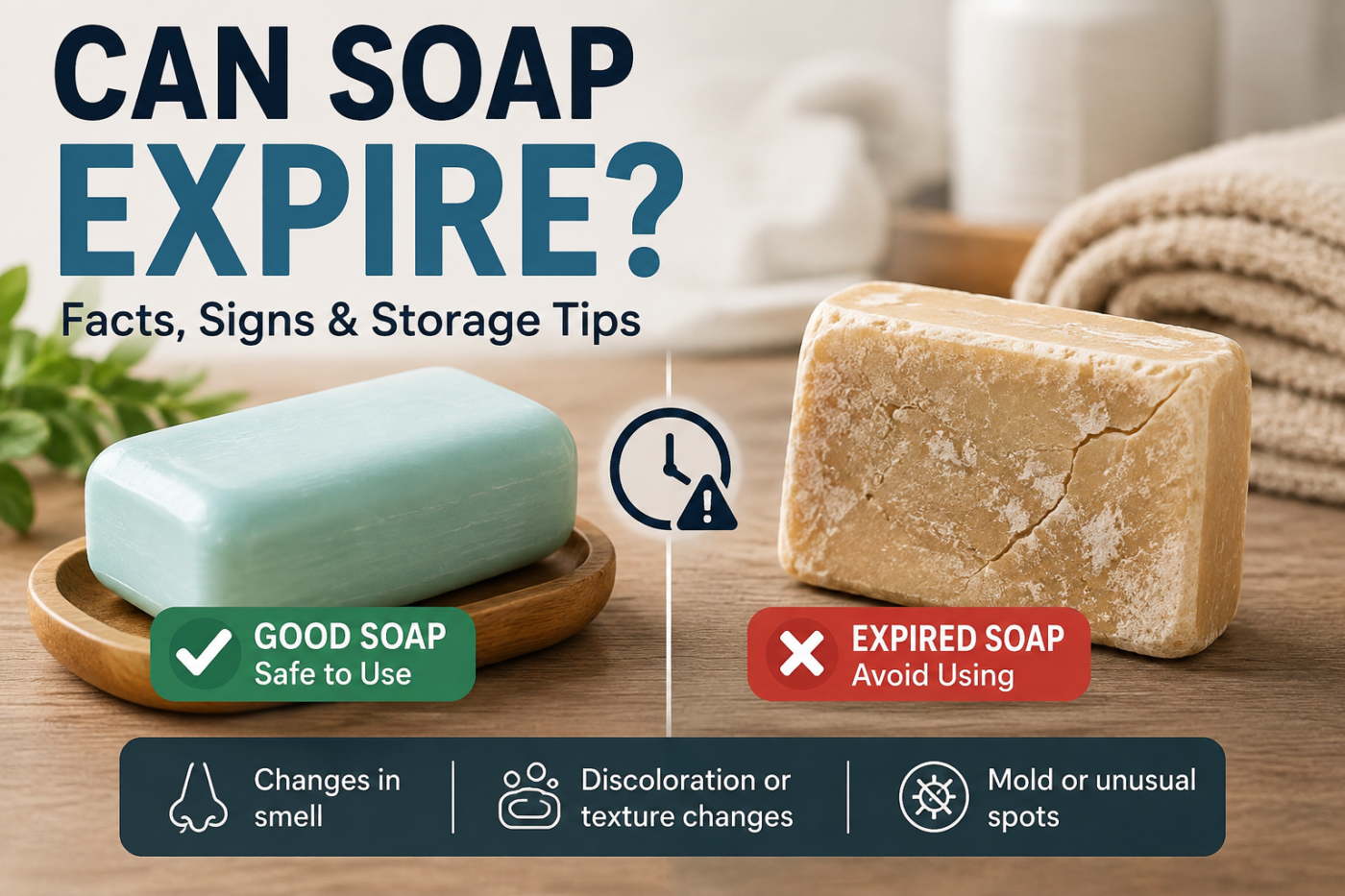

Soap seems like one of those household products that can sit in a cabinet forever. Unlike milk, medicine, or other everyday products with obvious expiration dates, a bar of soap may remain usable long after you bought it. But that raises an important question: can soap expire, or does it simply become less effective with age?
The short answer is that soap can deteriorate over time, although it does not necessarily “expire” in the same way food does. Its fragrance, texture, appearance, lather, and overall performance can change as its ingredients age. Storage conditions also play a major role. Heat, humidity, air exposure, and standing water can accelerate these changes.
Understanding the difference between an actual safety concern and a simple loss of quality can help you decide whether an old bar or bottle belongs in your bathroom or in the trash.
Can Soap Expire?
Traditional soap generally does not have a strict expiration point at which it suddenly becomes unsafe. However, it can lose quality over time. The can soap expire U.S. Food and Drug Administration explains that products such as cleansers can have different shelf lives depending on their formulation, ingredients, packaging, and storage conditions.
Commercial soap products may also contain fragrances, moisturizers, botanical ingredients, preservatives, or synthetic detergents. These components can change as they age. As a result, an older product may not look, smell, or perform exactly as it did when new.
This distinction matters because “expired” and “degraded” are not always the same thing. A traditional bar stored in a cool, dry cupboard may remain functional for a long time, while a poorly stored product can deteriorate much sooner.
How Long Does Bar Soap Last?
The can soap expire lifespan of a bar depends heavily on its formulation and storage. Some manufacturers provide specific shelf-life recommendations. For example, Safeguard lists up to two years after production for unopened bar soap and liquid hand soap or body wash.
Other commercially produced bars can remain usable beyond that period, although their quality may gradually decline. Dove notes that commercially made cleansing bars can remain at their best for roughly two to three years when stored appropriately.
Natural and homemade soaps can behave differently. Oils and botanical ingredients may oxidize with time, affecting fragrance, color, and texture. Therefore, there is no universal expiration date that applies to every bar.
Unopened Soap
An unopened bar usually lasts longer than one exposed to repeated moisture. Its original packaging provides some protection against humidity, dust, and air.
If you find an old, unopened bar in a dry linen closet, inspect it before using it. A mild change in scent or color does not automatically mean it is unusable, but strong rancid odors, unusual discoloration, or visible contamination are good reasons to discard it.
Used Soap
A bar sitting beside a shower faces a completely different environment. Repeated exposure to water can soften the bar and encourage surface deterioration.
Standing water is particularly problematic because it keeps the can soap expire soap damp between uses. Proper drainage and airflow can significantly improve how long the bar remains firm and pleasant to use.
Does Liquid Soap Expire?
Liquid soap deserves a little more attention because its formulation differs from a traditional solid bar. Many liquid hand soaps and body washes contain water, surfactants, fragrances, preservatives, and other ingredients.
Over time, preservatives can lose effectiveness, while ingredients may separate or change texture. The can soap expire FDA notes that preservatives can break down and that exposure to moisture, heat, air, and other environmental conditions can contribute to product deterioration.
For this reason, check the manufacturer’s recommended shelf life whenever one is provided. Safeguard, for example, recommends a shelf life of up to two years after production for unopened liquid hand soap and body wash.
Once opened, handling also matters. Touching the pump or dispensing mechanism repeatedly can introduce contaminants around the opening. Keeping the container clean and tightly closed helps preserve the product.
Signs That Old Soap Has Gone Bad
Knowing what to look for is more useful than relying on age alone. An old product may still work perfectly, while another may show obvious deterioration before its stated shelf life.
1. A Strong Rancid Smell
A sour, stale, oily, or rancid odor is one of the clearest warning signs, particularly with soaps containing natural oils or fats. Oxidation can soap expire alter these ingredients and produce unpleasant smells.
A simple loss of fragrance is different. Perfume can fade naturally without indicating that the entire bar has become unusable.
2. Major Color Changes
Some fading is normal as fragrances and colorants age. However, dramatic discoloration, unexplained dark spots, or unusual patches deserve closer inspection.
Homemade soaps containing natural ingredients can be especially prone to color changes. If the change is accompanied by an unpleasant smell or strange texture, replacement is the safer choice.
3. Strange Texture
A bar that becomes extremely brittle, slimy, sticky, or unusually soft may have experienced significant degradation or poor storage.
Liquid soap can also become unusually thick, watery, lumpy, or separated. While some separation can soap expire be corrected by gentle mixing, persistent or dramatic changes suggest that the product is past its best condition.
4. Visible Mold or Contamination
Visible mold should never be ignored. A product showing obvious mold, foreign growth, or contamination should be discarded rather than attempting to remove the affected portion.
Moist environments can create favorable conditions for microbial growth, particularly around products that remain wet for extended periods.
Does Expired Soap Still Clean?
An older traditional soap can often continue to perform its basic cleansing function even after its peak quality has passed. The cleaning compounds do not necessarily stop working on a particular day.
However, aging can affect lather, fragrance, texture, and other characteristics. A can soap expire bar may become harder and less pleasant to use, while liquid products may change consistency.
It is also important to distinguish ordinary soap from products marketed as antibacterial or therapeutic cleansers. Some products sold as “soap” are actually cosmetics or drugs under U.S. regulatory definitions, depending on their ingredients and intended claims.
If a cleanser makes a specific therapeutic or antimicrobial claim, follow its label instructions and expiration information rather than assuming it behaves like ordinary soap.
How to Store Soap Properly
Good storage can make a surprisingly large difference.
For bar soap, the most important rule is simple: keep it dry between uses. Use a draining soap dish instead of leaving the bar in a puddle of water. A raised or slotted holder allows air to circulate underneath the soap.
Keep the can soap expire away from direct shower spray whenever possible. Constant exposure to water can soften it, reduce its longevity, and contribute to musty odors.
For liquid soap, keep the container closed and store it according to the manufacturer’s instructions. Avoid leaving it in extreme heat, direct sunlight, or other harsh conditions. The FDA notes that heat can accelerate degradation and may contribute to preservative breakdown in certain cosmetic products.
Homemade Soap Has a Different Shelf Life
Homemade soap requires additional consideration because its ingredients and manufacturing process vary considerably.
Cold-process soap commonly contains oils or fats that can oxidize over time. A properly cured bar can remain usable well beyond its initial curing period, but the quality of the oils influences its longevity.
Natural fragrances and essential oils may also fade. Some bars can develop small orange or brown spots associated with oxidation. If the soap smells rancid or shows significant deterioration, it is better to discard it.
Because homemade recipes vary so much, the soap maker’s formulation and storage recommendations are more useful than applying a generic expiration date.
Should You Throw Away Old Soap?
Not necessarily. Age alone does not automatically make every bar unusable.
Instead, consider several factors: age, smell, appearance, texture, storage conditions, and product type. A properly stored traditional bar that is several years old but looks and smells normal may simply have lost some fragrance or lather.
On the can soap expire other hand, a relatively new product that has been sitting in warm, wet conditions and now smells rancid or shows visible contamination should not be used.
When the product is intended to treat a medical or skin condition, follow the manufacturer’s expiration date and instructions. Drug products have different requirements from ordinary soap and cosmetics.
Frequently Asked Questions
Can soap expire if it is unopened?
Yes, soap can deteriorate even when unopened, although it generally lasts longer when protected from moisture, heat, and air. Check the can soap expire manufacturer’s recommended shelf life when available.
Can you use soap that is years old?
Possibly. Traditional soap may remain functional for years, but its quality can decline. Inspect it for unusual odor, discoloration, texture changes, or contamination before use.
Does bar soap last longer than liquid soap?
Not necessarily. Each product has a different formulation and storage profile. Manufacturer recommendations are the best starting point.
Can soap grow mold?
A wet product can become contaminated, particularly when can soap expire exposed to persistent moisture and poor storage conditions. Visible mold is a reason to discard the product.
How should bar soap be stored?
Keep it in a well-drained soap dish, away from direct water, and allow it to dry between uses.
Final Verdict: Can Soap Expire?
So, can soap expire? In practical terms, yes, soap can deteriorate with age, but it does not always have a sudden expiration point like perishable food. Traditional bars can remain usable for a long time, particularly when stored in a cool, dry environment.
The can soap expire safest approach is to evaluate the product rather than relying on age alone. Look for changes in smell, color, texture, and appearance, and always pay attention to manufacturer instructions for specialized products.
Good storage is equally important. Keeping soap dry, protecting it from excessive heat, and maintaining clean containers can preserve its quality for longer. When an old product shows obvious deterioration or contamination, replacing it is a small price to pay for a cleaner and more comfortable routine.










Leave a Comment