

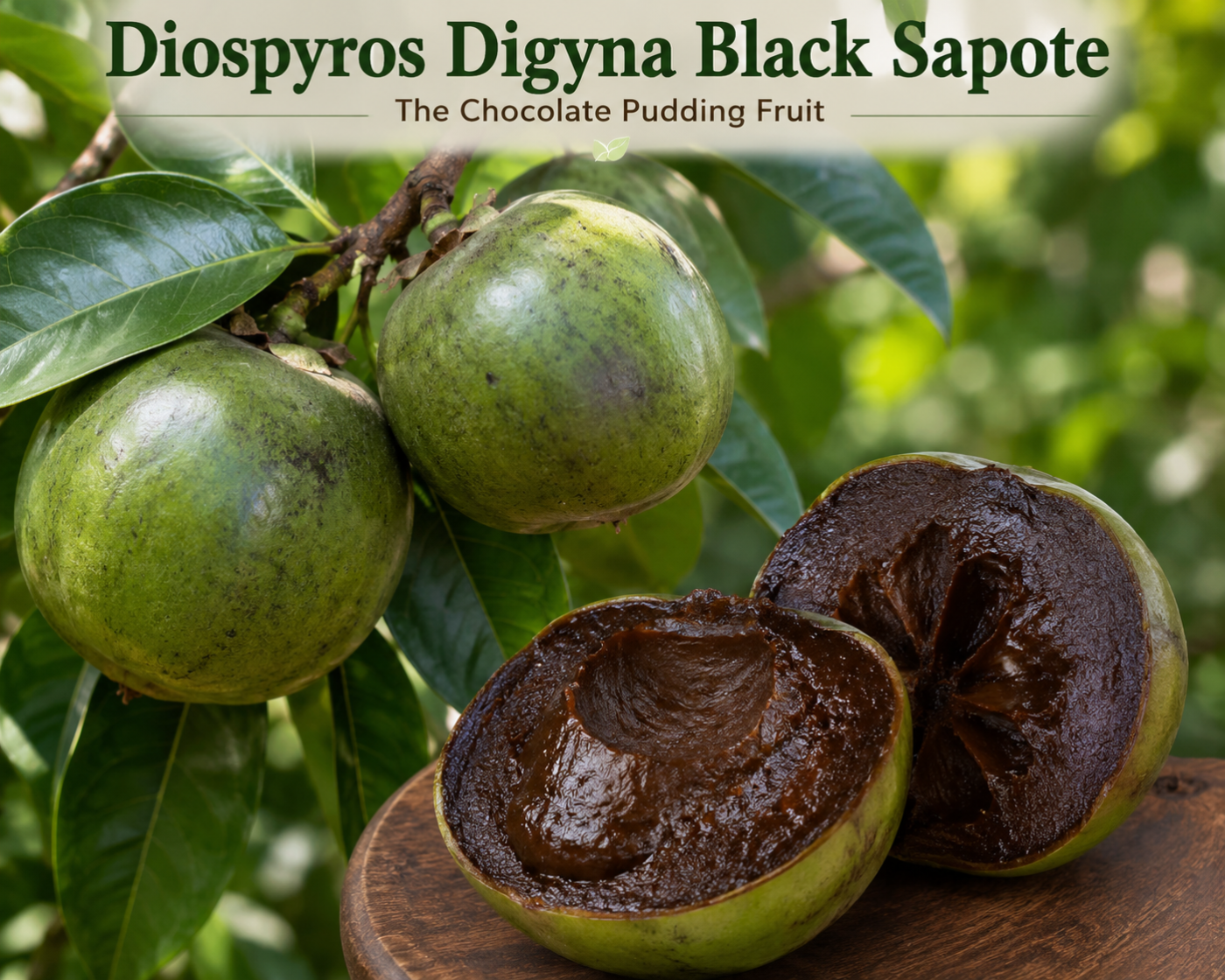

Diospyros digyna black sapote is one of the most fascinating tropical fruit trees in the world. Often called the “chocolate pudding fruit,” it surprises first-time tasters with its soft texture and naturally sweet flavor after ripening. Although its appearance resembles a green tomato before harvest, the inside transforms into a rich, dark brown pulp that has earned worldwide attention among fruit enthusiasts and gardeners alike.
Native to Central America and southern Mexico, this remarkable fruit has become increasingly popular in tropical and subtropical regions. Home gardeners appreciate the tree for its attractive evergreen foliage, while food lovers enjoy its unique taste and impressive nutritional profile. Whether you are interested in cultivating exotic fruit trees or simply want to learn more about unusual produce, understanding this species offers valuable insights.
This comprehensive guide explains everything you need to know about diospyros digyna black sapote, including its origin, characteristics, cultivation requirements, nutritional value, culinary uses, and common growing challenges.
What Is Diospyros Digyna Black Sapote?
Diospyros digyna black sapote is a tropical evergreen tree belonging to the Ebenaceae family, the same botanical family as persimmons. Despite being nicknamed the chocolate pudding fruit, it contains no chocolate. The comparison comes entirely from its smooth texture and dessert-like consistency once fully ripe.
The tree can reach heights of 20 to 80 feet depending on growing conditions. It develops glossy green leaves, small white flowers, and round fruits that gradually mature over several months.
Unlike many tropical fruits, black sapote should never be eaten while firm. The Diospyros digyna black sapote fruit must become extremely soft before consumption. During ripening, its flesh changes from pale green to deep chocolate brown, developing the sweet flavor that makes it famous.
Origin and Natural Habitat
The history of diospyros digyna black sapote dates back centuries. Indigenous communities in Mexico and Central America cultivated and consumed the fruit long before European exploration.
Today, commercial production exists in several warm regions, including:
- Mexico
- Guatemala
- Costa Rica
- Belize
- Australia
- Hawaii
- Florida
- The Philippines
These areas share similar climates characterized by warm temperatures, seasonal rainfall, and minimal frost exposure. Because the Diospyros digyna black sapote species evolved in tropical forests, it thrives in environments with abundant sunlight and moderate humidity.
Botanical Characteristics
Tree Appearance
The black sapote tree is admired for its ornamental qualities. Its dense canopy provides excellent shade, making it an attractive addition to tropical landscapes.
Key characteristics include:
- Evergreen foliage
- Dark glossy leaves
- Smooth gray bark
- Fragrant white flowers
- Rounded fruit with green skin
Mature trees produce abundant crops under favorable conditions and may continue fruiting for decades.
Fruit Development
Young fruits begin as small green spheres before gradually increasing in size. Most fruits measure between 2 and 5 inches in diameter when mature.
Harvest typically occurs while the fruit remains firm. After picking, it ripens at room temperature over several days until the flesh becomes soft enough to eat.
Nutritional Benefits
One reason black sapote continues gaining popularity is its impressive nutritional profile.
The fruit naturally contains:
Vitamin C
Black sapote provides generous amounts of vitamin C, supporting immune function and healthy skin.
Dietary Fiber
Its fiber content promotes digestive health while helping maintain satiety after meals.
Potassium
Potassium contributes to normal muscle function, hydration balance, and cardiovascular health.
Antioxidants
Natural plant compounds help protect cells from oxidative stress and support overall wellness.
Unlike many processed desserts, ripe black sapote contains very little fat while delivering natural sweetness.
Flavor and Texture
The flavor of diospyros digyna black sapote often surprises new consumers.
Although frequently compared to chocolate pudding, its taste is more accurately described as a blend of:
- Mild cocoa notes
- Caramel
- Honey
- Persimmon
- Dates
The creamy consistency makes it especially suitable for desserts without requiring excessive added sugar.
Its flavor improves significantly after complete ripening. Eating underripe fruit results in an unpleasant, astringent taste.
Growing Diospyros Digyna Black Sapote
Climate Requirements
Black sapote performs best in tropical and subtropical climates.
Ideal growing conditions include:
- Temperatures between 70°F and 90°F
- Full sunlight
- Frost-free environments
- Moderate humidity
Young trees are especially sensitive to freezing temperatures.
Soil Preferences
Healthy growth depends on well-drained soil rich in organic matter.
Suitable soil characteristics include:
- Slightly acidic to neutral pH
- Good drainage
- Moderate fertility
- Deep root space
Heavy clay soils may require amendments to improve drainage.
Watering
Consistent watering encourages healthy root development during the establishment phase.
Once mature, trees become moderately drought tolerant but still benefit from regular irrigation during prolonged dry periods.
Avoid waterlogged conditions, as excessive moisture may encourage root diseases.
Fertilization Tips
Balanced nutrition supports vigorous growth and increased fruit production.
Young trees respond well to:
- Organic compost
- Slow-release balanced fertilizer
- Micronutrient supplements when needed
Mature trees generally require fertilization several times each growing season, particularly before flowering and fruit development.
Applying mulch around the base also helps conserve soil moisture while improving soil quality over time.
Flowering and Pollination
Black sapote trees produce small flowers that may be male, female, or both depending on the cultivar.
Some varieties require cross-pollination for maximum fruit production, while others produce satisfactory yields independently.
Bees and other pollinating insects play an essential role during flowering.
Gardeners planting multiple compatible cultivars often enjoy larger harvests.
Harvesting the Fruit
Determining the correct harvest time is essential.
Fruit should be picked while:
- Fully grown
- Green
- Slightly softened
- Free from major blemishes
After harvesting, allow the fruit to ripen indoors.
A fully ripe black sapote becomes Diospyros digyna black sapote extremely soft and develops deep brown flesh throughout.
Attempting to consume firm fruit usually results in bitterness.
Popular Culinary Uses
One reason diospyros digyna black sapote attracts culinary interest is its versatility.
The creamy pulp works well in numerous recipes.
Smoothies
Blending ripe black sapote with bananas, milk, and yogurt Diospyros digyna black sapote creates naturally sweet beverages without excessive sugar.
Desserts
Many chefs use the pulp in:
- Puddings
- Ice cream
- Cakes
- Brownies
- Cheesecake
- Mousse
Its creamy consistency reduces the need for butter or heavy cream.
Breakfast Dishes
The fruit pairs well with:
- Oatmeal
- Greek yogurt
- Granola
- Pancakes
- Toast toppings
Its mild sweetness complements fresh berries and tropical fruits.
Common Growing Problems
Although relatively hardy, black sapote trees occasionally encounter cultivation challenges.
Root Rot
Poor drainage increases the risk of fungal diseases affecting root systems.
Proper soil preparation helps prevent this issue.
Fruit Drop
Environmental stress, inconsistent watering, or nutrient Diospyros digyna black sapote deficiencies may cause premature fruit drop.
Maintaining steady growing conditions minimizes losses.
Insect Pests
Depending on the region, growers may encounter:
- Scale insects
- Aphids
- Fruit flies
- Mealybugs
Regular inspection allows early treatment before infestations become severe.
Can You Grow Black Sapote in Containers?
Yes, young trees adapt reasonably well to large containers.
Container-grown trees require:
- Excellent drainage
- Regular watering
- Annual pruning
- Balanced fertilization
- Occasional root maintenance
However, mature specimens eventually benefit from permanent planting in the ground where root systems have more space.
Health Considerations
Black sapote is generally considered safe for most individuals when consumed as ripe fruit.
Its naturally sweet flavor makes it a useful alternative for people seeking healthier dessert options.
However, moderation remains important as part of a balanced diet. Individuals with specific dietary concerns should consult qualified healthcare professionals regarding personal nutritional needs.
Why Gardeners Love This Tree
Beyond its fruit production, the black sapote tree offers several landscape advantages.
Its evergreen canopy provides year-round beauty while attracting pollinators during flowering.
The tree Diospyros digyna black sapote also produces relatively little litter compared with many tropical fruit species, making maintenance easier.
For gardeners interested in sustainable food production, black sapote represents an attractive combination of ornamental appeal and edible harvests.
Conclusion
Diospyros digyna black sapote stands out as one of the world’s most unusual tropical fruits. Its transformation from a firm green fruit into a rich, pudding-like dessert has fascinated gardeners and food enthusiasts for generations. Alongside its pleasant flavor, the tree offers ornamental beauty, dependable productivity, and impressive nutritional benefits.
Whether you hope to grow an exotic fruit tree in a warm climate or simply expand your knowledge of tropical produce, black sapote deserves serious attention. With proper care, suitable soil, and adequate warmth, this remarkable species can reward growers with delicious harvests for many years while adding lasting beauty to the landscape.








Leave a Comment