

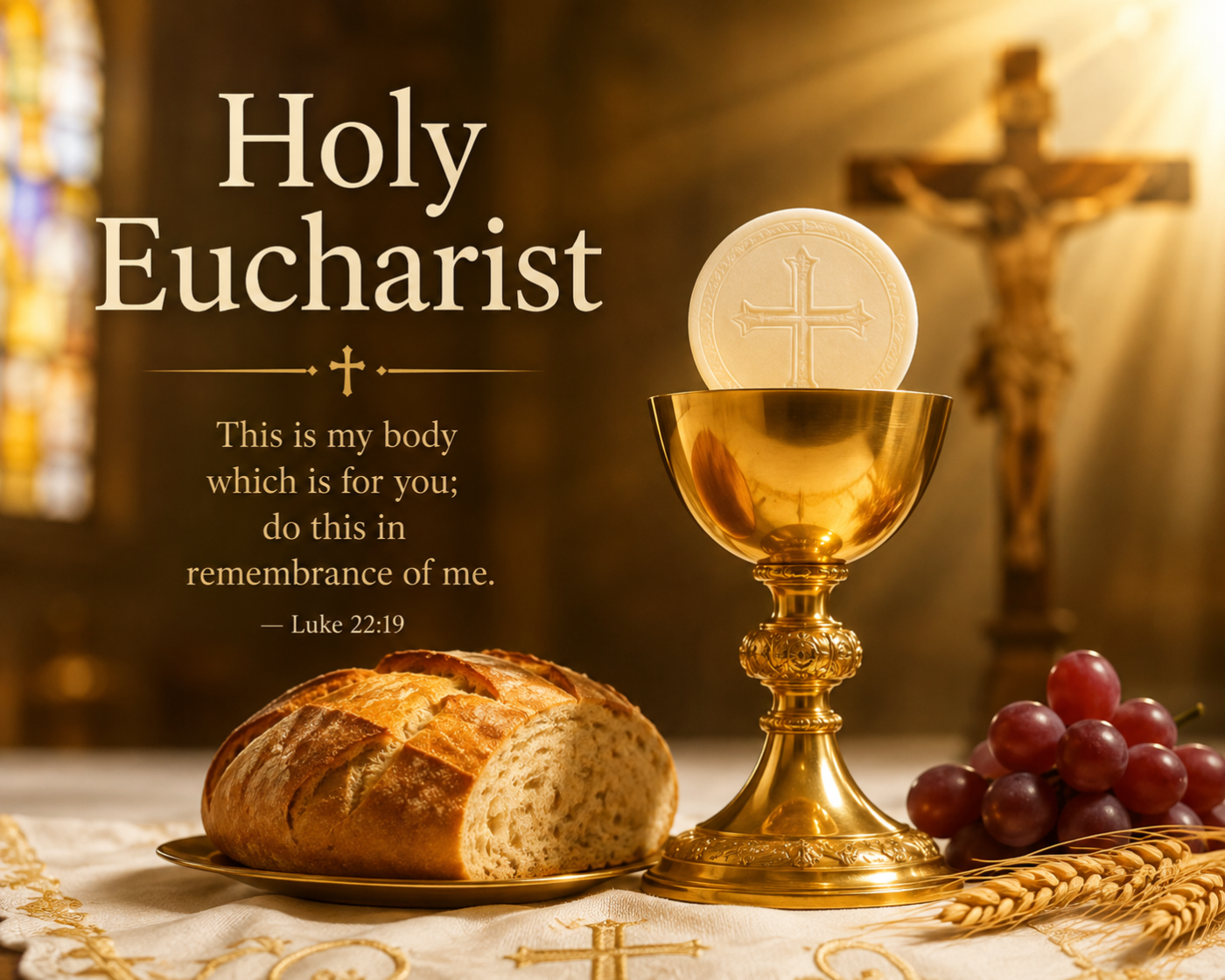

The Holy Eucharist stands at the heart of Christian worship and has been celebrated by believers for centuries. For many Christians, it is far more than a religious ceremony. It is a sacred act of remembrance, thanksgiving, communion, and spiritual nourishment centered on Jesus Christ. Although different Christian traditions understand and celebrate the Eucharist in distinctive ways, they generally recognize its deep connection with the Last Supper and the life, death, and resurrection of Christ.
The word “Eucharist” comes from the Greek term eucharistia, meaning “thanksgiving.” This meaning captures an important aspect of the practice. Christians gather to give thanks to God while remembering Christ’s sacrifice and celebrating the hope offered through his resurrection. The ceremony can therefore unite biblical teaching, personal faith, communal worship, and Christian tradition in one meaningful practice.
Understanding the Eucharist requires more than knowing what happens during a church service. Its significance becomes clearer when you examine its biblical foundation, symbolism, history, and place in Christian life.
What Is the Holy Eucharist?
The Holy Eucharist is a Christian sacrament or sacred rite in which believers remember and participate spiritually in the Last Supper of Jesus with his disciples. During the service, bread and wine are used according to Christ’s command to remember him.
The practice is rooted particularly in the Gospel accounts of the Last Supper. Jesus took bread, gave thanks, broke it, and gave it to his disciples. He then took the cup and shared it with them. Christians have continued this pattern as an important expression of faith and worship.
Different denominations use different names for the practice. It may be called Holy Communion, the Lord’s Supper, the Mass, or simply the Eucharist. While the terminology and theological interpretations vary, the central focus remains Christ and his relationship with his followers.
Why Is It Called Eucharist?
The term Eucharist emphasizes thanksgiving. Christians give thanks for God’s grace, Christ’s sacrifice, and the promise of salvation.
This Holy Eucharist idea of thanksgiving also gives the ceremony a positive and communal character. Rather than focusing only on sorrow, the Eucharist connects remembrance of Christ’s suffering with gratitude, hope, and the joy of resurrection.
The Biblical Foundation of the Eucharist
The roots of the Eucharist are found throughout the New Testament, particularly in the accounts of the Last Supper. Matthew, Mark, Luke, and Paul provide important references to the event and its meaning.
In Luke 22:19, Jesus tells his disciples to do this in remembrance of him. Paul also discusses the Lord’s Supper in 1 Corinthians 11, emphasizing the importance of approaching the practice thoughtfully and respectfully.
Another significant passage appears in John 6, where Jesus speaks extensively about bread, life, and his relationship with those who believe in him. Christian traditions interpret these passages differently, but they have played an important role in shaping Eucharistic theology.
The Holy Eucharist biblical foundation demonstrates that Communion was not a practice invented centuries later. The earliest Christian communities regarded shared bread and wine as an important part of their worship and fellowship.
What Does the Holy Eucharist Symbolize?
The Holy Eucharist Eucharist carries several layers of meaning. Its symbolism can differ among denominations, but several themes appear consistently across Christian traditions.
Remembrance of Jesus Christ
One of the clearest purposes is remembrance. Christians recall the life and ministry of Jesus, especially his sacrificial death and resurrection.
However, biblical remembrance involves more than simply thinking about something that happened in the past. It can involve actively bringing an important event into the center of communal worship and allowing its meaning to shape present faith.
Christ’s Sacrifice
The bread and wine point Christians toward Christ’s sacrifice. They remind believers of the suffering and death associated with the crucifixion.
For Christians, the cross represents God’s love, forgiveness, and the possibility of reconciliation. The Eucharist keeps these themes visible within regular worship.
Christian Unity
The Holy Eucharist also represents fellowship among believers. Christians gather around one table rather than worshiping as isolated individuals.
Sharing Communion can therefore express the idea that followers of Christ belong to one spiritual community. It encourages reconciliation, mutual responsibility, and love for others.
Spiritual Nourishment
Food naturally provides a powerful religious image. Just as physical food sustains the body, Christians often understand the Eucharist as a source of spiritual nourishment.
This Holy Eucharist does not necessarily mean every denomination understands the bread and wine in the same way. Instead, the symbolism points toward dependence on God and the continuing need for spiritual renewal.
How Different Christian Traditions Understand the Eucharist
Christian denominations share the biblical foundation of Communion but do not always agree about its theological meaning or method of celebration.
Catholic Understanding
In the Catholic tradition, the Eucharist occupies a central position in Christian worship. Catholic teaching holds that the bread and wine become the Body and Blood of Christ through consecration, while their outward appearances remain those of bread and wine.
The celebration of the Eucharist forms the central part of the Mass. Catholics regard receiving Communion as a profound encounter with Christ and an essential expression of Christian faith.
Orthodox Christian Understanding
Eastern Orthodox Christians also consider the Eucharist a central sacrament of the Church. Orthodox worship places strong emphasis on mystery, sacred tradition, prayer, and the presence of Christ.
The Holy Eucharist celebration forms the center of the Divine Liturgy. Orthodox Christians generally understand the consecrated elements as truly participating in Christ’s Body and Blood while emphasizing that the exact manner of this mystery cannot be reduced to a simple explanation.
Protestant Understanding
Protestant traditions contain a wider range of interpretations. Some churches, such as Lutheran and Anglican communities, maintain a strong belief in Christ’s presence in Communion, although their theological explanations differ.
Other Protestant churches understand the Lord’s Supper primarily as an act of remembrance and proclamation. In these traditions, the bread and cup serve as powerful signs that direct believers toward Christ’s sacrifice and the promises of the gospel.
These differences are important, but they also demonstrate the broad significance Communion continues to hold throughout Christianity.
What Happens During Holy Communion?
The Holy Eucharist exact order varies between churches, but many Eucharistic services contain several recognizable elements.
The congregation usually gathers for prayers, Scripture readings, hymns, preaching, or other forms of worship. The minister or priest then leads the congregation through prayers associated with the Eucharist.
Bread and wine, or bread and grape juice in some traditions, are presented. Thanksgiving prayers are offered, and the congregation remembers Christ’s words at the Last Supper.
The elements are then distributed to worshipers according to the customs of that particular church.
For some Christians, Communion is received individually. In other settings, people approach together or receive the elements from clergy or designated ministers. The outward practice may differ, but the intention remains centered on worship, remembrance, and communion with Christ and fellow believers.
Why Is the Eucharist Important to Christians?
The importance of the Eucharist comes from its ability to connect several fundamental aspects of Christian faith.
First, it keeps Jesus Christ at the center of worship. Second, it reminds Christians of the sacrifice associated with the cross. Third, it encourages believers to examine their relationship with God and with other people.
The Holy Eucharist ceremony can also provide a regular opportunity for spiritual reflection. Modern life often moves quickly, leaving little time for silence or contemplation. Communion creates a structured moment when Christians can pause, pray, remember, and renew their commitment to their faith.
For many believers, the Eucharist is therefore both communal and deeply personal.
Preparing to Receive the Eucharist
Preparation depends on the Christian denomination and the particular church. Some traditions ask worshipers to fast, confess sins, pray, or participate in other forms of spiritual preparation.
The Holy Eucharist broader principle is intentional participation. Receiving Communion should not become an empty routine. Christians are encouraged to approach it with faith, humility, gratitude, and awareness of its meaning.
Paul’s teaching in 1 Corinthians 11 is especially relevant here. He warns believers against treating the Lord’s Supper carelessly and connects proper participation with self-examination and consideration for others.
This teaching highlights an important point: the Eucharist is not simply about receiving religious elements. It also concerns the attitude and conduct of the person receiving them.
The Eucharist and Christian Community
Christianity is not only an individual relationship between a believer and God. It also involves belonging to a community of faith.
The Eucharist expresses this communal dimension in a powerful way. People from different backgrounds gather together around a shared confession of faith. The common meal-like setting reminds believers that Christian discipleship involves relationships, service, forgiveness, and responsibility.
This is why the Eucharist can also challenge Christians. It encourages them to consider whether their everyday actions reflect the love and reconciliation they proclaim during worship.
Is the Eucharist the Same in Every Church?
No. Christian churches differ in their understanding, terminology, frequency of celebration, and rules surrounding Communion.
Some churches celebrate the Holy Eucharist every week or even more frequently. Others observe it monthly or according to another schedule. The role of ordained clergy, the type of bread and drink used, and the theological interpretation of Christ’s presence can also vary.
These Holy Eucharist distinctions are part of the broader diversity within Christianity. Anyone visiting another Christian congregation should therefore learn that church’s Communion practices rather than assuming every tradition follows the same pattern.
The Continuing Significance of the Eucharist
Despite centuries of theological debate and denominational differences, the Eucharist remains an enduring feature of Christian worship.
Its strength comes partly from its simplicity. Bread and wine provide tangible reminders of an invisible spiritual reality. A congregation gathers, gives thanks, hears Scripture, remembers Christ, and shares in a sacred act that connects the present community with generations of Christians who came before.
The Holy Eucharist also points toward the future. Christian faith is built not only around remembering what Jesus did but also around hope in God’s promises. Communion can therefore connect past, present, and future within one act of worship.
Conclusion
The Holy Eucharist is one of Christianity’s most significant and enduring expressions of faith. Rooted in the Last Supper, it brings together remembrance, thanksgiving, sacrifice, fellowship, spiritual nourishment, and hope. While Catholic, Orthodox, Anglican, Lutheran, and other Protestant traditions may understand the Eucharist differently, its central connection to Jesus Christ remains unmistakable.
For Christians, Communion can serve as a regular reminder of what their faith teaches about love, forgiveness, sacrifice, and community. It Holy Eucharist invites worshipers not merely to remember Christ but to consider how his teachings should influence their lives.
Ultimately, the meaning of the Eucharist extends beyond the bread and cup. It points believers toward Christ, draws communities together, and keeps the central story of Christian faith alive through worship and remembrance.










Leave a Comment