

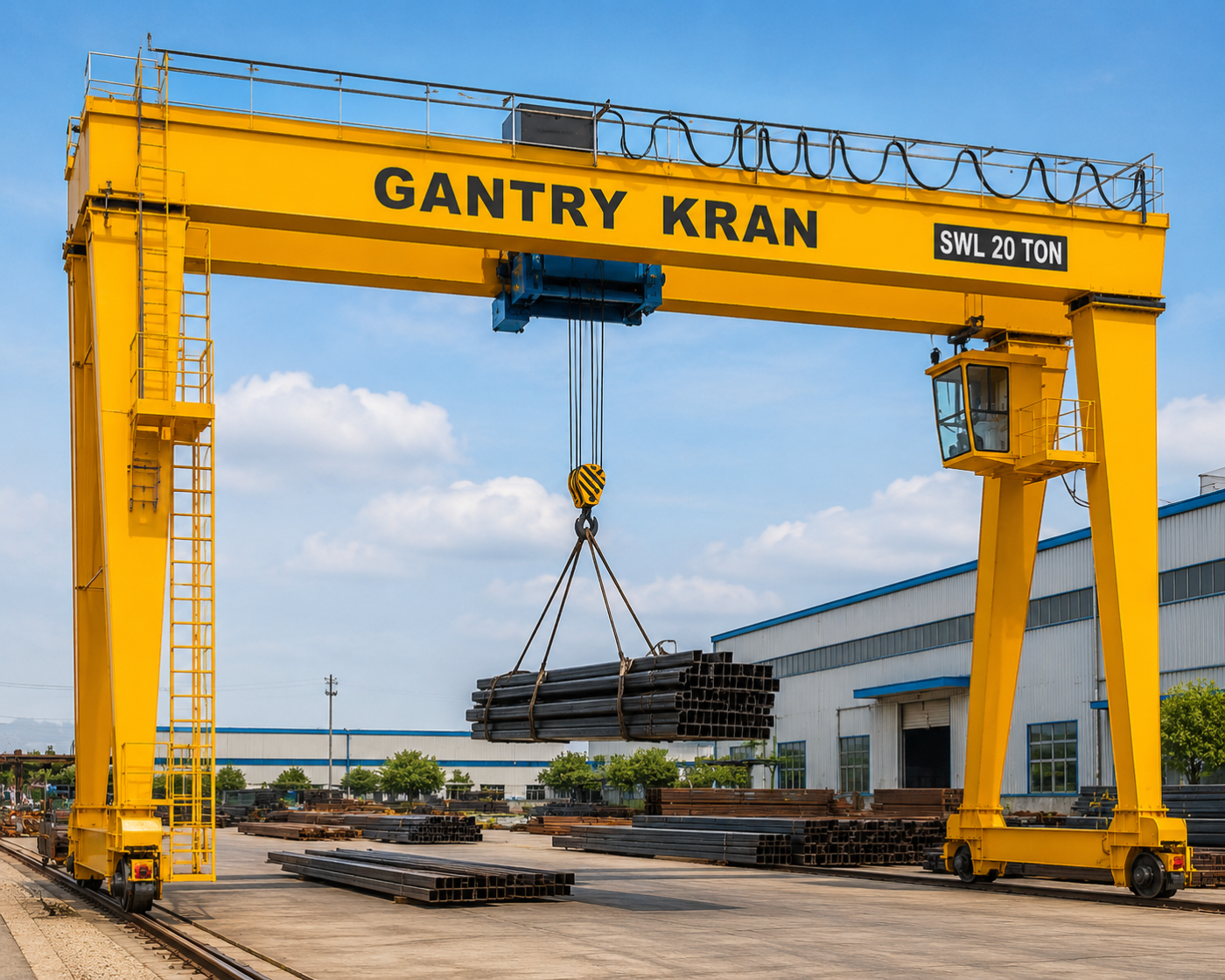

A gantry kran is one of the most practical lifting solutions used across modern industries. Whether you operate a warehouse, manufacturing plant, shipyard, or construction site, this equipment makes lifting and moving heavy loads safer and more efficient. Unlike overhead cranes that require permanent building support, a gantry system stands on its own legs and moves along rails or wheels. This flexible design allows businesses to transport materials with minimal effort while improving workplace productivity.
Today, industries demand equipment that combines strength, durability, and cost-effectiveness. A gantry kran meets these expectations by offering excellent lifting capacity, simple installation, and reliable performance in both indoor and outdoor environments. Understanding how this equipment works and where it performs best can help businesses make informed purchasing decisions and improve operational efficiency.
What Is a Gantry Kran?
A gantry kran is a lifting machine that consists of a horizontal beam supported by two vertical legs. A hoist travels along the beam, allowing operators to lift, lower, and transport heavy objects with precision. Unlike traditional bridge cranes, a gantry crane does not rely on a building’s structural framework for support.
This independent design makes it suitable for locations where installing overhead crane systems would be expensive or impractical. Industries appreciate its flexibility because it can be relocated, expanded, or customized according to operational requirements. From handling steel components to moving shipping containers, these cranes serve numerous industrial applications.
How Does a Gantry Kran Work?
The crane’s hoist lifts the load using chains, wire ropes, or lifting hooks. The trolley carrying the hoist moves horizontally across the bridge beam, while the entire crane travels along tracks or wheels.
This coordinated movement allows operators to position heavy materials accurately without excessive manual labor. Advanced models include electric controls, wireless remote systems, and automated safety mechanisms that further enhance productivity while reducing workplace risks.
Modern gantry cranes also integrate smart technologies for load monitoring, overload protection, and precision control, making daily operations more efficient.
Types of Gantry Kran
Full Gantry Crane
A full gantry crane has two supporting legs that run on floor-mounted rails. It offers exceptional stability and is commonly used in shipyards, steel factories, and large industrial facilities where extremely heavy loads must be handled regularly.
Semi-Gantry Crane
A semi-gantry crane uses one supporting leg while the opposite side travels on an elevated runway attached to the building. This design saves valuable floor space and works well in facilities with partial overhead support.
Portable Gantry Crane
Portable gantry kran models are lightweight and equipped with caster wheels for easy movement. Maintenance workshops, garages, and repair facilities often choose portable cranes because they can be repositioned quickly without permanent installation.
Adjustable Gantry Crane
Adjustable systems allow operators to modify the crane’s height and span according to changing project requirements. These cranes are ideal for businesses handling materials of different sizes throughout the year.
Rubber-Tired Gantry Crane
Rubber-tired gantry cranes are widely used in ports and container terminals. Instead of fixed rails, these machines travel on large rubber tires, providing greater flexibility when moving shipping containers across storage yards.
Major Components of a Gantry Kran
Every gantry kran consists of several essential components that work together to ensure smooth lifting operations.
Bridge Beam
The bridge beam supports the trolley and carries the lifting load across the crane’s span. It must be engineered to withstand significant weight while maintaining structural integrity.
Hoist
The hoist performs the actual lifting operation. Depending on the application, it may use electric motors, manual chains, or hydraulic systems.
Trolley
The trolley travels along the bridge beam, positioning the hoist precisely over the desired load.
Support Legs
The vertical legs provide stability and transfer the lifted weight safely to the ground or rail system.
Wheels or Rails
Depending on the crane type, movement occurs through rail-mounted wheels or rubber tires, allowing smooth transportation across the working area.
Common Applications
A gantry kran serves countless industries due to its versatility.
Manufacturing facilities use these cranes to transport machinery components, molds, and production materials between workstations. Construction companies rely on them for lifting steel beams, concrete panels, and heavy equipment. Warehouses benefit from efficient pallet handling and inventory movement, while shipyards use massive gantry systems to assemble vessels and move oversized marine structures.
Mining operations also depend on heavy-duty gantry cranes for equipment maintenance and material handling. Power plants, aerospace facilities, railway workshops, and logistics centers continue to adopt these cranes because they improve operational speed while reducing physical labor.
Benefits of Using a Gantry Kran
Businesses invest in gantry cranes because they deliver measurable operational advantages.
One of the biggest benefits is flexibility. Since these cranes do not require permanent overhead support, installation costs remain relatively low compared to bridge crane systems.
Another advantage is mobility. Portable and rubber-tired models can move between different work areas, maximizing equipment utilization across multiple projects.
High lifting capacity represents another important benefit. Modern gantry cranes can safely handle loads ranging from a few hundred kilograms to hundreds of tons.
Maintenance requirements are generally straightforward. Most systems feature accessible mechanical components that simplify inspections and routine servicing.
Safety also improves significantly because workers rely less on manual lifting techniques, reducing the likelihood of workplace injuries.
Industries That Depend on Gantry Kran
Numerous industries have integrated gantry cranes into their daily operations.
Automotive manufacturers use them to move engines and chassis during assembly. Steel fabrication companies lift massive metal structures throughout production. Renewable energy projects employ gantry cranes for assembling wind turbine components. Railway maintenance facilities use them for locomotive repairs, while aviation companies depend on them for aircraft component handling.
Large logistics hubs continue expanding their use of automated gantry cranes to accelerate cargo movement while maintaining high safety standards.
Choosing the Right Gantry Kran
Selecting the appropriate crane requires careful evaluation of operational needs.
The first consideration is lifting capacity. Businesses should calculate both current and future load requirements to avoid purchasing undersized equipment.
Span length determines the working coverage area, while lifting height affects the maximum elevation the crane can achieve.
Indoor and outdoor operating environments influence material selection and corrosion protection requirements.
Power options should also be evaluated carefully. Electric models provide smooth operation, while manual systems may suit lighter-duty applications with limited budgets.
Finally, businesses should assess maintenance support, spare parts availability, and manufacturer reputation before making a long-term investment.
Maintenance Tips
Proper maintenance ensures reliable performance and extends equipment lifespan.
Regular inspections should identify worn cables, damaged hooks, loose bolts, and structural fatigue before failures occur. Lubricating moving components minimizes friction and reduces premature wear.
Operators should verify that braking systems, emergency stop functions, and overload protection mechanisms operate correctly before each work shift.
Keeping the crane clean also prevents corrosion and allows technicians to identify potential issues more easily. Scheduled professional servicing helps maintain compliance with safety regulations while reducing unexpected downtime.
Safety Best Practices
Safe crane operation depends on proper training and consistent procedures.
Operators should never exceed the rated lifting capacity. Loads must remain balanced and securely attached before lifting begins. Personnel should avoid standing beneath suspended loads at all times.
Routine equipment inspections, clear communication between workers, and proper use of personal protective equipment contribute to a safer working environment.
Organizations should also establish emergency procedures and provide refresher training to ensure operators remain familiar with safe operating practices.
Future Trends in Gantry Kran Technology
Technological advancements continue transforming gantry crane performance.
Automation enables cranes to complete repetitive lifting tasks with minimal human intervention. Remote operation improves operator safety by allowing control from secure locations.
Artificial intelligence is beginning to optimize lifting paths, monitor equipment health, and predict maintenance needs before breakdowns occur.
Sensors connected through industrial Internet of Things (IoT) platforms provide real-time performance data, helping facility managers improve productivity while lowering operating costs.
Energy-efficient electric drives and regenerative braking systems also contribute to more sustainable industrial operations.
Conclusion
A gantry kran remains one of the most versatile and dependable material-handling solutions available today. Its adaptable design, impressive lifting capacity, and cost-effective installation make it suitable for manufacturing plants, construction sites, warehouses, ports, and countless other industries. Whether selecting a portable model for light-duty maintenance or a heavy-duty system for large industrial projects, businesses benefit from improved efficiency, enhanced workplace safety, and long-term operational reliability.
As technology continues to evolve, gantry cranes will become even smarter, safer, and more efficient. Investing in the right system while following proper maintenance and safety practices ensures years of dependable performance and supports the growing demands of modern industrial operations.










Leave a Comment