

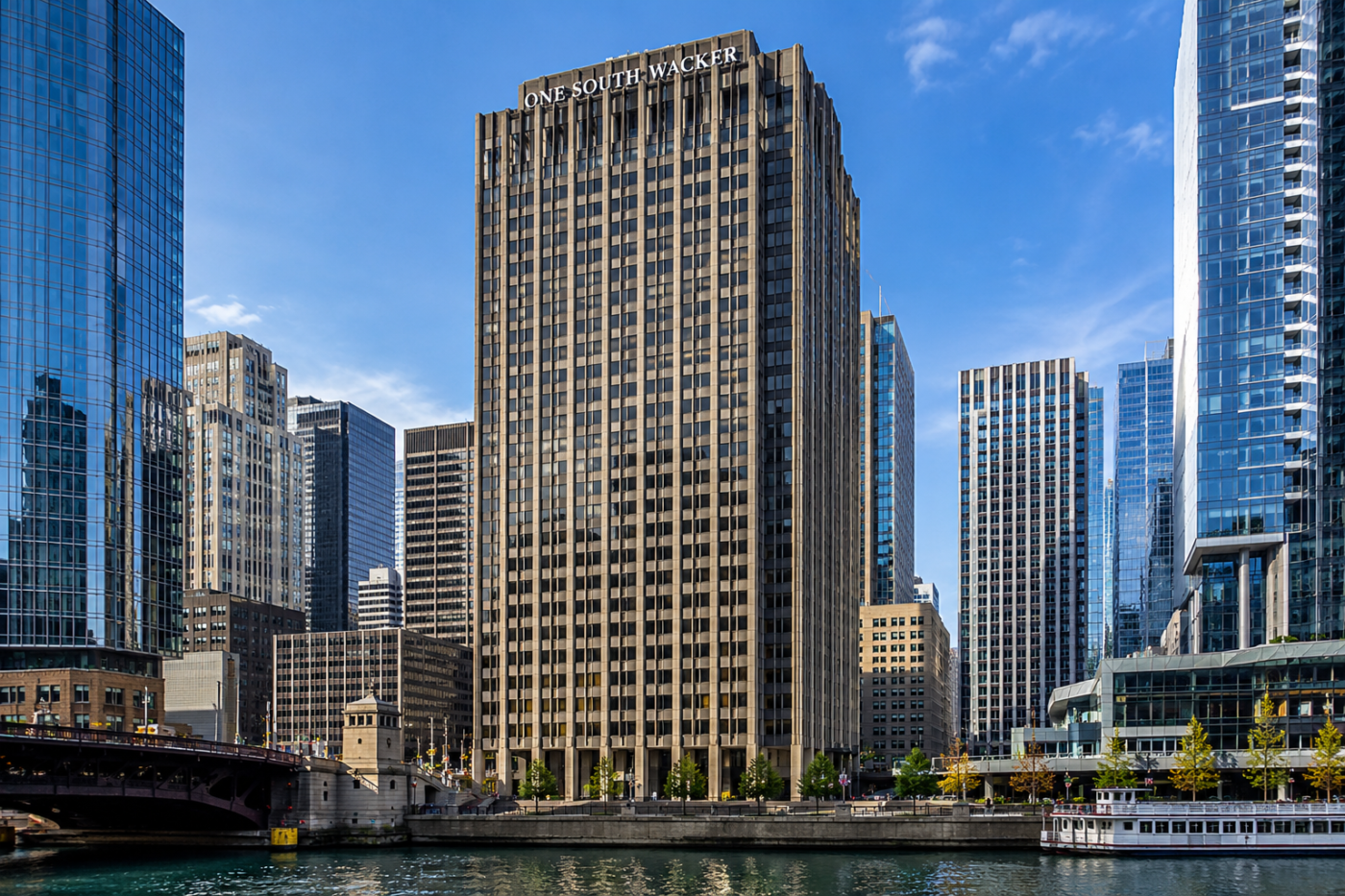

Chicago’s skyline is famous for ambitious architecture, and One South Wacker is one of the buildings that helped shape the city’s modern downtown identity. Located at 1 South Wacker Drive in the heart of the Loop, the tower has served as a major commercial office destination since its completion in 1982. Rising approximately 550 feet above the city, it combines a prominent location with a distinctive high-rise design.
Although newer and taller skyscrapers now dominate parts of Chicago’s skyline, this building remains significant. Its position near major transportation routes, business districts, restaurants, hotels, and civic attractions gives it practical value beyond its architectural presence. For companies seeking a downtown address, visitors exploring Chicago, and people interested in the city’s architectural history, the tower offers an interesting example of how commercial buildings can remain relevant for decades.
What Is One South Wacker?
One South Wacker is a 40-story office skyscraper in Chicago, Illinois. Its official address is 1 South Wacker Drive, Chicago, Illinois 60606. The building reaches about 550 feet, or 167.6 meters, and was completed in 1982.
Its location is especially important. South Wacker Drive sits within Chicago’s Loop, an area known for its concentration of corporate offices, financial institutions, transportation connections, restaurants, cultural attractions, and major landmarks. This places tenants within a dense urban environment where employees and visitors can access many services without traveling far.
The building also demonstrates an important period in Chicago’s skyscraper development. During the late twentieth century, downtown Chicago experienced substantial commercial growth, creating demand for large office towers capable of accommodating modern businesses.
History and Construction
Development in the Early 1980s
Construction on the tower began in 1979, and the project reached completion in 1982. The finished structure became part of a rapidly changing downtown skyline that already featured several landmark skyscrapers.
The early 1980s were an important era for commercial architecture. Businesses increasingly wanted centralized office locations with large floor plates, modern building systems, elevators, and convenient access to transportation. A high-rise such as this could provide those features while taking advantage of limited downtown land.
Rather than competing solely through extreme height, the building was designed as a practical commercial tower.
Architectural Design
The tower was designed by Murphy/Jahn, the architectural firm associated with architect Helmut Jahn. Its architecture reflects the modernist approach that became increasingly influential in Chicago during the twentieth century.
The design gives the building a strong vertical presence while maintaining a relatively straightforward commercial form. This approach allows the structure to fit naturally into Chicago’s dense business district.
For architecture enthusiasts, One South Wacker is also useful as a reminder that a city’s skyline is not created only by its most famous landmarks. Numerous commercial towers collectively establish the visual character of downtown.
Where Is One South Wacker Located?
The building stands at 1 South Wacker Drive, close to the western side of Chicago’s Loop.
This location provides an important advantage for businesses. Downtown Chicago functions as a major employment center, and being positioned within the Loop places workers close to offices, restaurants, retail destinations, hotels, and public transportation.
The surrounding street network also makes the location convenient for people traveling from different parts of the metropolitan area. Chicago’s extensive public transportation system reduces the need for every employee or visitor to rely on private vehicles.
Why the Loop Location Matters
A downtown office address can influence more than convenience. It can affect how a company is perceived by clients, employees, and business partners.
A central location may help organizations attract workers who prefer shorter commutes, while nearby amenities can make the workday more convenient. For businesses that regularly meet clients or partners, being in a recognizable commercial district can also provide a professional setting.
That combination of location, accessibility, and business prestige helps explain why established downtown office towers continue to matter even as workplace trends evolve.
Building Features and Office Environment
One South Wacker was built primarily for commercial office use. Over time, office buildings of its generation have had to adapt to changing expectations around technology, employee comfort, energy efficiency, and workplace design.
The property’s current leasing information highlights improvements designed to increase natural light. According to the building’s official leasing website, window upgrades are being undertaken throughout the tower to provide more natural light in common and tenant spaces.
This kind of modernization is increasingly important in older office buildings. Today’s tenants often expect workplaces to provide more than desks and elevators. They look for comfortable environments, appealing common areas, reliable infrastructure, and spaces that support collaboration.
Consequently, maintaining a large commercial tower is an ongoing process rather than a one-time construction project.
Why One South Wacker Remains Relevant
A Recognizable Business Address
A downtown Chicago address can be valuable for organizations that want to establish a strong corporate presence. One South Wacker’s location places tenants within one of the city’s most recognizable business environments.
The building has accommodated businesses from different professional sectors, demonstrating the flexibility expected from a major office property.
Access to Downtown Amenities
Employees working at the tower can take advantage of the wider Loop environment. Restaurants, coffee shops, hotels, retail businesses, cultural destinations, and transportation options are all part of the surrounding urban landscape.
This creates a different workplace experience from an isolated suburban office campus. Instead of providing every service inside one development, a downtown tower becomes part of a much larger ecosystem.
Continued Modernization
Modernization is one of the biggest challenges facing older commercial buildings. Office tenants compare established properties with newly constructed towers that offer contemporary amenities and highly efficient systems.
Updating elements such as windows, common spaces, technology, and tenant facilities can help older properties remain competitive. The ongoing window improvements at One South Wacker illustrate this broader approach to maintaining a longstanding office tower.
One South Wacker Compared With Newer Chicago Towers
Chicago contains numerous office skyscrapers, and One South Wacker is not among the city’s newest or tallest structures. Nevertheless, height alone does not determine a building’s usefulness.
New towers may offer cutting-edge amenities and highly contemporary designs, while established buildings can provide something equally valuable: a proven downtown location and a long history within the business community.
The tower’s approximately 550-foot height and 40 floors make it substantial by ordinary standards, even though Chicago has many significantly taller skyscrapers.
Its continued presence therefore illustrates an important point about urban development. Buildings do not necessarily become irrelevant simply because newer structures rise nearby. With appropriate maintenance and modernization, well-located properties can remain commercially useful for generations.
The Importance of Wacker Drive
Wacker Drive is one of Chicago’s most recognizable streets and an important part of the city’s architectural identity. The roadway connects different parts of downtown while running through an area filled with major office towers.
For One South Wacker, the street name is more than an address. It places the building within a corridor strongly associated with Chicago’s commercial landscape.
The surrounding collection of towers also creates an interesting architectural contrast. Older structures stand beside newer glass skyscrapers, producing the layered skyline for which Chicago is famous.
Visiting the Area
Someone visiting One South Wacker is also positioned to explore much of central Chicago. The Loop offers access to major attractions, public spaces, restaurants, theaters, museums, and historic architecture.
Architecture enthusiasts can particularly appreciate the area’s concentration of buildings from different periods. Walking through the surrounding streets reveals how Chicago’s skyline developed incrementally rather than through a single architectural movement.
Visitors should remember, however, that One South Wacker is primarily an office property. Access to tenant areas and private facilities may be restricted. Anyone visiting for business should confirm arrangements with the relevant company or building management.
One South Wacker in Chicago’s Architectural Story
The significance of this tower goes beyond its height or number of floors. It represents a period when Chicago continued to expand its commercial core through substantial office developments.
Its 1982 completion placed it within a generation of skyscrapers that helped establish the modern Loop.
Today, the tower provides an interesting case study in architectural longevity. Its continued use demonstrates how an older skyscraper can adapt to changing expectations while retaining the fundamental advantages of its original location.
That adaptability may ultimately be more important than architectural novelty. A building that continues serving businesses decades after construction has demonstrated practical success.
Conclusion
One South Wacker remains an important part of Chicago’s commercial landscape because it combines architectural history with a highly strategic downtown location. Completed in 1982, the 40-story, 550-foot office tower reflects the city’s long tradition of high-rise commercial development.
Its greatest strength may not be its height but its position within the Loop. Businesses benefit from proximity to transportation, services, clients, and the broader downtown environment. Meanwhile, continued improvements such as window upgrades show how an established property can respond to modern workplace expectations.
For anyone researching Chicago architecture, downtown offices, or the history of Wacker Drive, the building offers a useful example of urban longevity. It proves that a skyscraper does not need to be the newest or tallest structure in the city to remain an influential part of its identity.








Leave a Comment