

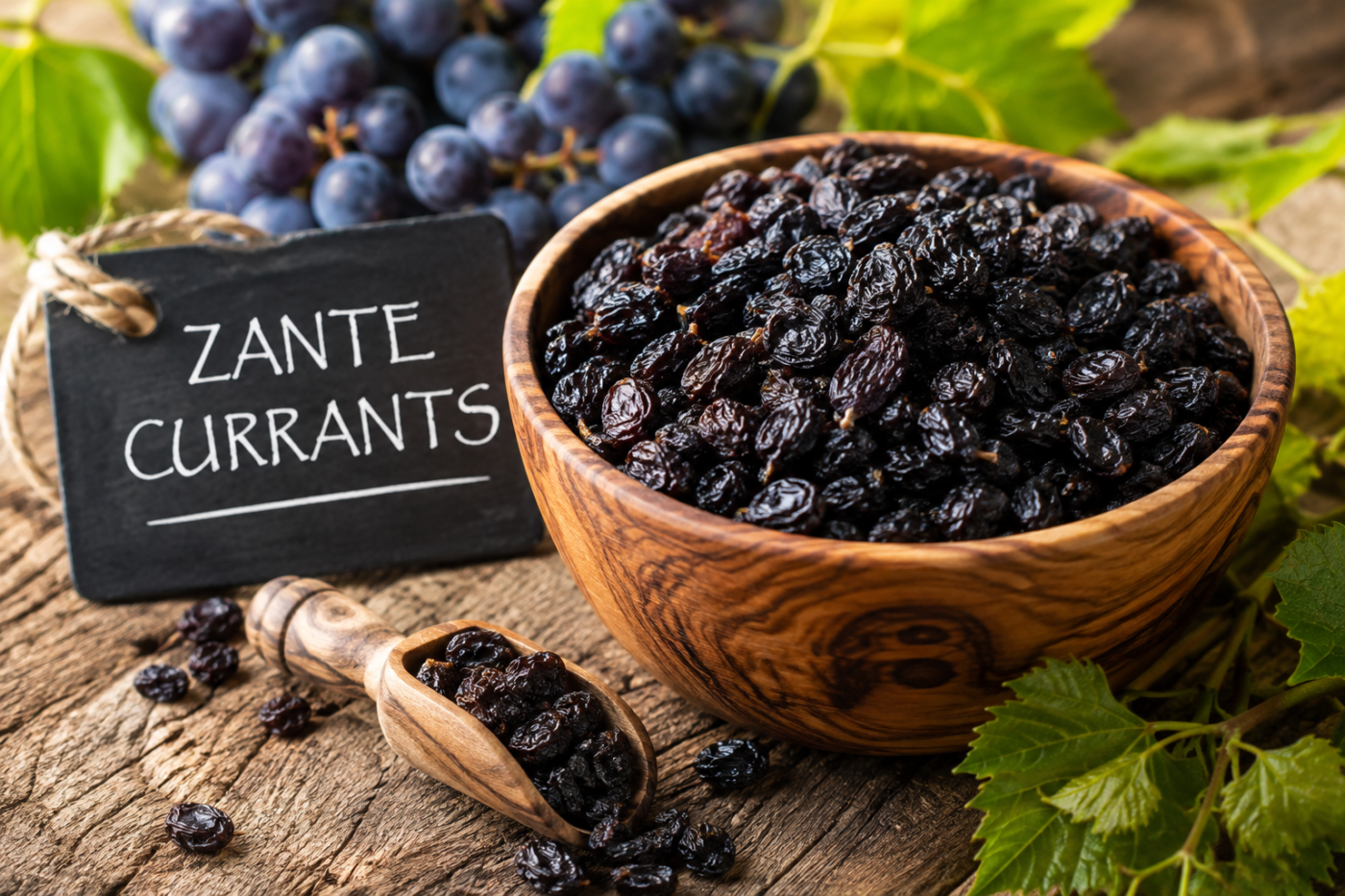

Small, dark, and intensely flavored, Zante currants have earned a lasting place in kitchens around the world. Despite their name, these dried fruits are not the same as the fresh red or black currants commonly sold in produce sections. Instead, they are typically dried grapes, especially small grape varieties traditionally associated with currant production. Their concentrated sweetness, subtle tartness, and chewy texture make them useful in both sweet and savory recipes.
From traditional baked goods to modern grain bowls, these tiny dried fruits can add depth without overwhelming other ingredients. They also provide carbohydrates, fiber, and several micronutrients, although their concentrated nature means that portion size matters. Understanding where they come from, how they differ from other dried fruits, and how to use them can help you make better choices in the kitchen.
What Are Zante Currants?
Zante currants are small dried grapes that are commonly marketed as currants. The name is linked historically to the Greek island of Zakynthos, also known by its Italian name, Zante. The fruit has a long association with Mediterranean agriculture and European cooking.
Unlike conventional table grapes, the grapes used for these dried fruits are very small. Once dried, they become dark, wrinkled, and intensely flavored. Their size gives them a distinctive advantage in cooking because they distribute easily throughout dough, rice, cereals, sauces, and other dishes.
The term “currant” can be confusing. True currants come from plants in the Ribes genus, while Zante currants are generally dried grapes. This distinction is particularly important when shopping because packaging and regional terminology can sometimes blur the difference.
How Are They Different From Regular Raisins?
At first glance, Zante currants may look like miniature raisins. That comparison is reasonable because both products are dried grapes. However, their characteristics are noticeably different.
Size and Texture
Zante currants are usually smaller than standard raisins. Their compact size allows them to blend naturally into baked goods and savory dishes. They also tend to have a firm, slightly chewy texture.
Regular raisins are generally larger and may have a softer, more substantial bite. Golden raisins, meanwhile, have a lighter color and often a fruitier flavor profile.
Flavor
The flavor of these tiny dried grapes is concentrated. They can provide a combination of sweetness and mild tartness, making them particularly effective in recipes that need contrast.
Because they are small, they can also create a more even flavor distribution than larger dried fruits. A spoonful incorporated into a loaf or pilaf can provide little bursts of sweetness throughout the dish.
Nutritional Profile
Like other dried fruits, Zante currants contain nutrients naturally present in grapes, but drying removes much of the water. As a result, the sugars and calories become concentrated in a smaller volume.
They provide dietary fiber, carbohydrates, and small amounts of minerals such as potassium and iron. They also contain plant compounds associated with grapes.
However, dried fruit should not automatically be considered a low-calorie food. A handful can contain considerably more sugar and calories than the same physical volume of fresh grapes because the water has been removed.
For this reason, a modest serving can work well as part of a balanced diet. Pairing dried fruit with foods containing protein, healthy fats, or additional fiber can also make a snack more satisfying.
Potential Benefits of Zante Currants
Including dried fruit in a varied diet can contribute useful nutrients, particularly when portions are sensible.
They Provide Dietary Fiber
Fiber supports normal digestive function and contributes to feelings of fullness. Since Zante currants contain fiber, adding a small amount to oatmeal, whole-grain cereal, or yogurt can increase the overall fiber content of a meal.
The exact nutritional contribution depends on the serving size and product, so checking the package label remains the best way to determine the amount you are consuming.
They Supply Quick Energy
The carbohydrates in dried grapes can provide readily available energy. This makes them convenient for adding to trail mixes, breakfast foods, or snacks when you want something portable.
Their small size is another advantage. You do not need much preparation, refrigeration, or special equipment to enjoy them.
They Contain Plant Compounds
Grapes naturally contain various polyphenolic compounds. Some of these compounds remain present after processing, although the nutritional characteristics of a particular dried-fruit product can vary.
It is better to view these compounds as one part of an overall nutritious diet rather than treating Zante currants as a special-purpose health food.
Culinary Uses
One of the biggest strengths of these dried grapes is versatility. Their small size makes them easy to incorporate into countless recipes.
Baking
Zante currants are excellent in baked goods where you want a subtle fruit component. They can be added to muffins, scones, biscuits, quick breads, cookies, and fruit loaves.
Because they are smaller than many raisins, they can spread evenly through the dough. Their concentrated flavor can also complement cinnamon, nutmeg, citrus zest, and warm spices.
Breakfast Foods
A spoonful can turn a simple bowl of oatmeal or porridge into a more interesting breakfast. They also work well with granola, muesli, yogurt, and whole-grain cereals.
For a balanced breakfast, combine them with ingredients such as nuts, seeds, plain yogurt, or whole grains rather than relying on dried fruit alone.
Rice and Grain Dishes
Dried currants are particularly useful in savory cooking. They can introduce sweetness and acidity to rice pilafs, couscous, bulgur, quinoa, and other grain-based dishes.
Try combining them with toasted almonds, herbs, onions, and aromatic spices. The result is a pleasant contrast between savory, nutty, and sweet flavors.
Salads
Small dried fruits can provide a welcome textural contrast in salads. They pair especially well with leafy greens, grains, roasted vegetables, nuts, and tangy dressings.
A modest quantity is usually enough. Their flavor is concentrated, so adding too many can make the dish unnecessarily sweet.
How to Use Them in Cooking
Some recipes call for soaking dried fruit before adding it. This technique can soften the fruit and restore some moisture.
To soak them, place the currants in warm water for several minutes, then drain them thoroughly. You can also use fruit juice, tea, or another suitable liquid when the recipe calls for additional flavor.
If you are adding them to a baked recipe, soaking may not always be necessary. In fact, excess moisture can affect the final texture of some doughs and batters. Follow the recipe instructions when available.
For savory dishes, briefly warming the fruit with other ingredients can help distribute its flavor throughout the dish.
What to Look for When Buying Them
When purchasing Zante currants, read the ingredient list carefully. Some products contain only dried grapes, while others may include added oils, sugars, or preservatives.
If you want the simplest option, choose a product with a short ingredient list. Compare nutrition labels as well, particularly if you are monitoring added sugars or calorie intake.
Appearance can also provide useful clues. Good-quality dried fruit should generally have a consistent color and texture without excessive moisture or visible signs of spoilage.
Proper storage matters after opening. Keep the package sealed and store it according to the manufacturer’s recommendations. A cool, dry environment can help preserve quality.
Are Zante Currants the Same as Black Currants?
No. This is one of the most important distinctions to understand.
Black currants are true currants belonging to the Ribes genus. They are berries with a different botanical identity, flavor, and culinary profile. Zante currants, by contrast, are dried grapes.
The confusion largely comes from historical naming and common commercial terminology. If a recipe specifically calls for black currants, substituting dried grape currants may significantly change the flavor and texture.
Can You Substitute Them for Raisins?
In many recipes, yes. Their similar nature means they can often replace raisins in approximately comparable quantities.
However, the smaller size and more concentrated flavor can change the final result. If you want larger pieces of dried fruit, regular raisins may be preferable. If you want evenly distributed sweetness with a slightly sharper flavor, Zante currants can be an excellent alternative.
They can also be mixed with raisins to create more textural variety.
Frequently Asked Questions
Are Zante currants actually grapes?
Yes. The products commonly sold as Zante currants are generally dried grapes rather than true currant berries.
Do they contain a lot of sugar?
They contain naturally occurring sugars that become concentrated during drying. Some commercial products may also contain added sugar, so checking the nutrition and ingredient labels is worthwhile.
Can you eat them straight from the package?
Yes. They can be eaten as a snack or added directly to foods such as cereal, yogurt, and trail mix.
Should they be refrigerated?
Follow the storage instructions on the package. After opening, keeping dried fruit tightly sealed in a cool, dry place generally helps maintain quality.
Conclusion
Zante currants may be tiny, but they offer impressive culinary versatility. Their identity as dried grapes rather than true currant berries explains both their appearance and their relationship to raisins. With a concentrated sweet-tart flavor and chewy texture, they can enhance everything from baked goods and breakfast bowls to rice dishes and salads.
Nutritionally, they can contribute fiber and other nutrients, but their sugars and calories are concentrated because drying removes water. The best approach is to enjoy them in reasonable portions as part of a varied diet.
Whether you are experimenting with Mediterranean-inspired cooking or simply looking for a flavorful alternative to ordinary raisins, these small dried fruits deserve a place in the pantry. Used thoughtfully, they can bring sweetness, texture, and character to an unexpectedly wide range of meals.










Leave a Comment