

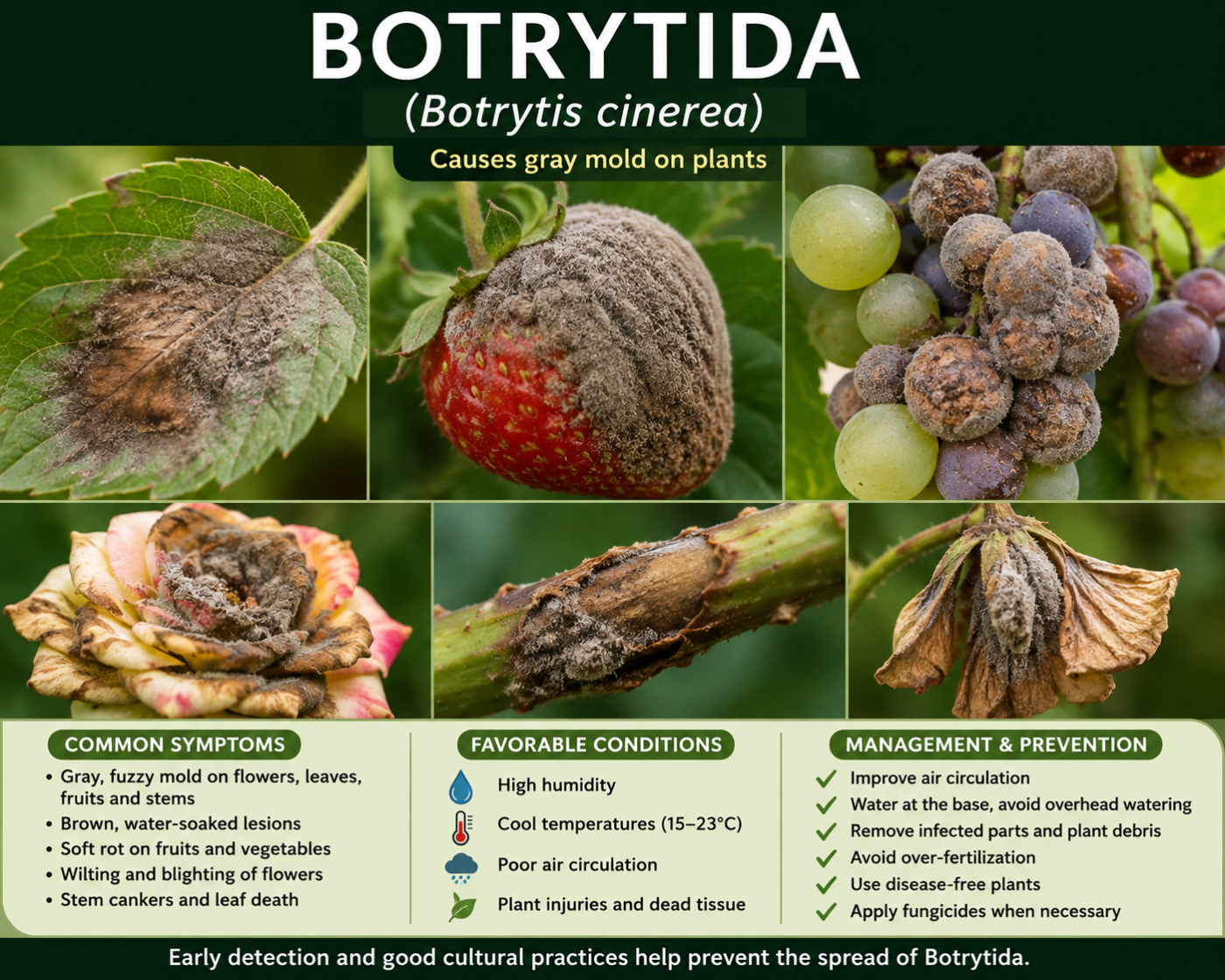

Botrytida is a fungal disease that affects a wide range of plants, from vegetables and fruits to ornamental flowers. Gardeners, farmers, and greenhouse growers often encounter this disease because it spreads quickly under favorable environmental conditions. Although it is commonly known as gray mold, botrytida can cause significant economic losses if it is not identified and managed early.
Understanding how this fungal disease develops is the first step toward protecting healthy crops. The fungus thrives in cool, humid conditions and attacks weakened or damaged plant tissues before spreading to healthy areas. Fortunately, proper cultivation practices, early detection, and preventive measures can greatly reduce the risk of infection.
In this guide, you’ll learn everything you need to know about botrytida, including its causes, symptoms, life cycle, prevention methods, treatment options, and best management practices for both home gardens and commercial farms.
What Is Botrytida?
Botrytida refers to a fungal disease caused primarily by Botrytis cinerea, a widespread pathogen that infects hundreds of plant species. It is best known for producing a fuzzy gray mold on infected flowers, fruits, leaves, and stems.
It commonly infects:
- Tomatoes
- Strawberries
- Grapes
- Lettuce
- Peppers
- Roses
- Geraniums
- Tulips
- Cannabis plants
- Various greenhouse ornamentals
Because the fungus can survive in plant debris for long periods, it often returns season after season if sanitation practices are neglected.
Understanding the Life Cycle
The fungus responsible for botrytida has a surprisingly efficient life cycle.
During unfavorable weather, it survives in dead plant material or soil as dormant fungal structures. Once moisture levels rise and temperatures become moderate, spores begin developing rapidly.
Wind, rain, irrigation water, insects, gardening tools, and even workers can spread these microscopic spores from one plant to another. After landing on moist plant tissue, the spores germinate and invade the surface within hours.
As the infection progresses, new spores develop on gray fuzzy growth, allowing the disease to spread even faster throughout the growing area.
This repeating cycle explains why outbreaks can escalate quickly inside greenhouses or densely planted gardens.
Conditions That Favor Botrytida
Several botrytida environmental conditions encourage fungal development.
High Humidity
Humidity above 90% creates ideal conditions for spore germination. Moist leaves allow the fungus to penetrate plant tissue much more easily.
Poor Air Circulation
Plants growing too closely together trap moisture around leaves and stems. Limited airflow slows drying and promotes fungal growth.
Cool Temperatures
The botrytida fungus performs best between 15°C and 23°C (59°F to 73°F). These moderate temperatures often occur during spring and autumn.
Overhead Irrigation
Water splashing across plants spreads spores while keeping foliage wet for extended periods.
Common Symptoms
Recognizing symptoms early can prevent severe crop losses.
Gray Fuzzy Mold
The most recognizable sign is the appearance of soft gray mold covering infected tissues.
Brown Water-Soaked Spots
Leaves and flowers often develop wet-looking brown lesions before mold appears.
Fruit Rot
Soft fruits become mushy and decay rapidly. Strawberries and grapes are especially vulnerable.
Flower Blight
Flower petals wilt prematurely, turn brown, and become covered with gray spores.
Stem Cankers
Dark lesions may develop on stems, eventually causing branches to wilt and die.
Leaf Death
Infected leaves yellow, collapse, and eventually dry out.
These symptoms often begin on older or damaged plant parts before moving to healthy tissues.
Plants Most Frequently Affected
Although botrytida infects hundreds of species, certain crops experience more serious damage.
Vegetables
Tomatoes, cucumbers, peppers, beans, lettuce, onions, and eggplants are common hosts.
Fruits
Strawberries, blueberries, raspberries, grapes, cherries, and apples may all suffer from gray mold during wet seasons.
Ornamentals
Roses, carnations, chrysanthemums, lilies, tulips, peonies, and orchids frequently develop infections in humid environments.
Greenhouse Crops
Protected growing environments often experience recurring outbreaks because humidity remains consistently high.
How the Disease Spreads
The fungus spreads through several pathways.
Airborne spores travel considerable distances on wind currents. Irrigation systems can distribute spores across entire fields or greenhouse benches.
Garden tools contaminated during pruning may transfer the fungus to healthy plants. Workers handling infected plants can unknowingly spread spores by touch.
Dead flowers and fallen leaves become breeding grounds for new fungal growth, releasing millions of spores during humid weather.
Preventing Botrytida
Prevention remains the most effective management strategy.
Improve Airflow
Space plants properly to allow good ventilation. Prune overcrowded branches to increase air circulation.
Water Correctly
Water plants near the base rather than spraying foliage.
Remove Plant Debris
Regularly collect dead leaves, spent flowers, and infected fruits. Never leave diseased material beneath plants.
Avoid Excess Nitrogen
Over-fertilization encourages lush, soft growth that becomes more susceptible to fungal attack.
Use Healthy Plant Material
Purchase disease-free seedlings and inspect new plants before introducing them into gardens or greenhouses.
Clean Equipment
Disinfect pruning shears, knives, and other gardening tools after working with infected plants.
Managing Existing Infections
If botrytida has already appeared, prompt action is necessary.
Remove infected plant parts immediately and dispose of them away from the growing area. Never compost heavily infected material because spores may survive.
Improve ventilation by reducing overcrowding and lowering humidity whenever possible.
Commercial growers may apply registered fungicides labeled for gray mold control, rotating active ingredients to reduce resistance development. Fungicides work best when combined with sanitation rather than used alone.
Repeated monitoring helps detect new infections before they spread.
Greenhouse Management Strategies
Greenhouses provide ideal conditions for fungal growth unless environmental controls are carefully managed.
Maintain adequate ventilation using exhaust fans or roof vents. Avoid excessive humidity by heating and ventilating during cool mornings.
Monitor condensation on greenhouse surfaces, as dripping water spreads fungal spores.
Sanitize benches, trays, pots, and irrigation equipment between growing cycles.
Remove infected flowers immediately because ornamental crops can release enormous numbers of spores.
Environmental monitoring systems that track humidity and temperature help growers predict disease risk before outbreaks occur.
Integrated Disease Management
The most successful growers combine several control methods rather than relying on one solution.
Integrated disease management includes:
- Careful crop monitoring
- Proper irrigation scheduling
- Improved greenhouse ventilation
- Removal of infected tissues
- Crop rotation where appropriate
- Resistant plant varieties when available
- Responsible fungicide use
- Excellent sanitation practices
Combining these techniques significantly reduces disease pressure over time.
Economic Importance
Botrytida is responsible for millions of dollars in agricultural losses every year.
Fruit producers often lose marketable crops because infected berries and grapes deteriorate rapidly after harvest.
Flower growers face reduced quality and shorter vase life, while greenhouse operators may lose entire batches of ornamental plants during severe outbreaks.
Post-harvest losses also remain a major concern because infections sometimes continue developing during storage and transportation.
For commercial agriculture, preventing infection is generally much less expensive than treating widespread disease.
Common Mistakes to Avoid
Many outbreaks result from simple management errors.
One common mistake is watering late in the evening, leaving foliage wet overnight. Another is planting crops too closely together, limiting airflow between plants.
Ignoring small infected flowers or leaves allows spores to multiply rapidly.
Using contaminated pruning tools without cleaning them between plants also spreads infections.
Finally, relying exclusively on fungicides without improving environmental conditions often produces disappointing results.
Avoiding these mistakes greatly improves long-term disease control.
Frequently Asked Questions
Is botrytida harmful to humans?
The fungus primarily affects plants rather than people. However, workers handling large amounts of mold may experience allergic reactions if they are sensitive to fungal spores.
Can infected fruit be eaten?
Heavily infected fruit should be discarded because decay progresses quickly and quality deteriorates significantly.
Does cold weather kill the fungus?
Not entirely. The fungus survives unfavorable conditions in dormant structures and becomes active again when humidity and temperatures increase.
Can indoor plants become infected?
Yes. Houseplants growing in poorly ventilated, humid environments may also develop gray mold.
Future Research
Scientists continue studying better ways to manage fungal diseases while reducing dependence on chemical fungicides.
Researchers are exploring biological control agents, beneficial microorganisms, improved forecasting models, resistant plant varieties, and environmentally friendly treatments.
Advances in precision agriculture and greenhouse climate control also help growers predict disease outbreaks before symptoms become visible.
As sustainable farming practices evolve, integrated approaches will likely become the standard for managing fungal diseases effectively.
Conclusion
Botrytida remains one of the most widespread fungal diseases affecting agricultural crops, ornamental plants, and greenhouse production worldwide. Its ability to spread rapidly under cool, humid conditions makes early detection and preventive care essential. By understanding how the fungus develops, recognizing symptoms quickly, and maintaining proper sanitation and environmental management, growers can significantly reduce losses.
Successful disease management depends on combining multiple strategies rather than relying on a single treatment. Good airflow, careful watering, clean growing environments, regular monitoring, and timely removal of infected plant material all play vital roles in limiting fungal spread. Whether you manage a commercial greenhouse or simply care for a home garden, consistent preventive practices offer the best long-term defense against botrytida and help maintain healthier, more productive plants throughout the growing season.










Leave a Comment