

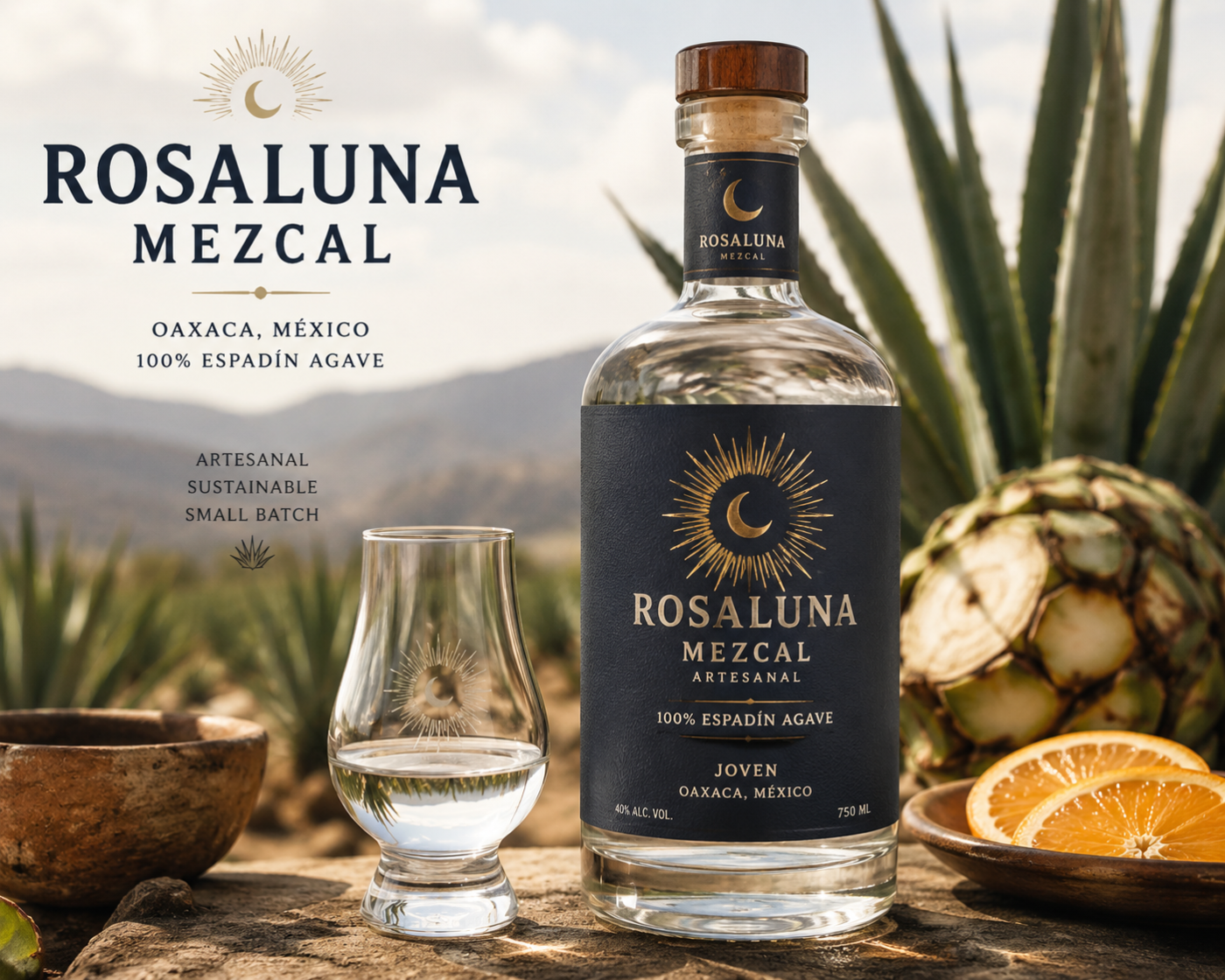

Mezcal has moved far beyond its reputation as simply a smoky Mexican spirit. Today, drinkers are exploring different agave varieties, production methods, and regional styles to understand what makes each bottle distinctive. Rosaluna Mezcal has attracted attention in this expanding category because it places the flavor of Espadín agave at the center of the experience while keeping its smoke relatively restrained.
Produced in Oaxaca, Rosaluna is made with single-estate-grown Espadín agave and follows a production approach designed to preserve the plant’s natural character. The brand describes its expression as bright, lightly smoky, and layered with citrus and tropical-fruit notes.
That profile makes it particularly interesting for people who want to explore mezcal without immediately jumping into extremely smoky or intensely earthy expressions. Here is a closer look at its ingredients, production, flavor, serving options, and overall appeal.
What Is Rosaluna Mezcal?
Rosaluna is a rosaluna mezcal produced in Oaxaca, Mexico. Its primary agave is Espadín, one of the most important cultivated agave varieties used in mezcal production.
According to the brand, the spirit uses 100% eight-year-old Capón Espadín agave, water, and no unnecessary additives. The finished bottle contains 40% alcohol by volume, or 80 proof.
The brand also identifies the product as USDA Organic, non-GMO, vegan, gluten-free, kosher, additive-free, and zero-carb.
Rather than presenting smoke as the dominant characteristic, Rosaluna emphasizes roasted agave, fruit, herbs, spice, and subtle mineral qualities. That distinction is important because mezcal can vary dramatically depending on the agave, cooking technique, fermentation, still, and region.
Where Is It Made?
Oaxaca is widely regarded as one of the most important regions in the mezcal world, and Rosaluna’s roots are closely connected to Santiago Matatlán, a community with a long mezcal-making tradition.
The rosaluna mezcal producer’s story is tied to the Méndez León Jiménez family, whose history in agave farming spans several generations. Industry coverage describes Rosaluna as a vertically integrated, single-estate operation, meaning the company oversees significant stages of the process from growing agave through production.
This connection between farming and distillation gives the brand a useful point of differentiation. Instead of treating agave simply as an ingredient, the production philosophy emphasizes the plant’s agricultural character and the influence of Oaxaca’s environment.
How Is Rosaluna Made?
Growing the Agave
Espadín requires years of cultivation before it reaches maturity. Rosaluna states that its agave is harvested after approximately eight years of growth.
That rosaluna mezcal lengthy maturation period matters because the plant develops sugars and compounds that eventually contribute to the aroma and flavor of the finished spirit.
Roasting the Agave Hearts
After harvesting, producers remove the leaves and retain the heart, known as the piña. Traditional mezcal production commonly cooks these agave hearts in underground pits, where heat and smoke transform the plant’s sugars.
Descriptions of Rosaluna’s production indicate that its agave is roasted before being milled, fermented, and distilled.
This cooking stage is one reason mezcal can develop smoky characteristics. However, Rosaluna is intentionally positioned as a lighter-smoke mezcal, allowing roasted-agave and fruit flavors to remain prominent.
Fermentation and Distillation
After cooking and milling, the agave material undergoes fermentation. The resulting liquid is then distilled to concentrate the spirit and refine its character.
A tasting description of Rosaluna reports a double-distillation process, while other production accounts describe fermentation followed by distillation designed to produce a clean, expressive spirit.
The rosaluna mezcal result is a clear, unaged mezcal rather than a barrel-aged expression.
What Does Rosaluna Taste Like?
The rosaluna mezcal flavor profile is arguably the most interesting part of this spirit.
Wine Enthusiast awarded Rosaluna a 93-point rating in 2026, describing aromas and flavors that include dried oregano, jalapeño, graphite, and dried herbs, with black-pepper heat and a sooty finish.
Another professional tasting gave the mezcal 90 points and identified roasted agave, lime pith, sage, peach, anise, mint, sea-water-like salinity, and torched jalapeño among its characteristics.
The rosaluna mezcal producer itself highlights citrus, pineapple, pear, roasted agave, ginger, cinnamon, and subtle smoke.
These descriptions may sound contradictory at first, but they demonstrate how layered mezcal can be. Depending on the taster and serving conditions, you may notice different elements.
Aroma
The rosaluna mezcal nose tends to combine roasted agave with herbal and fruity notes. Citrus and tropical fruit can appear alongside earthier aromas, while smoke remains present without completely dominating the glass.
Palate
On the palate, the rosaluna mezcal agave character remains central. Expect possibilities such as citrus, herbs, pepper, roasted vegetal flavors, and hints of tropical fruit. The spirit can also show subtle savory or mineral qualities.
Finish
The rosaluna mezcal finish is generally medium in length, with a combination of agave, spice, gentle smoke, and fruit. Its relatively approachable character makes it suitable for people who are still learning how to appreciate mezcal.
Is It Very Smoky?
One of the biggest misconceptions about mezcal is that every bottle should taste intensely smoky.
Rosaluna takes a different approach. Retail and tasting descriptions repeatedly characterize it as less smoky than many traditional mezcal expressions.
That does not mean the spirit lacks smoke. Instead, the smoke tends to support the agave rather than overwhelm it.
For newcomers, this can be a major advantage. You can experience the roasted character associated with mezcal while still identifying fruit, herbs, spices, and vegetal flavors.
How Does It Compare With Tequila?
Although both tequila and mezcal come from agave, they are not interchangeable.
Tequila production is centered on Blue Weber agave, while mezcal can be produced using several agave varieties. Production methods also differ, particularly in how the agave is cooked.
Traditional mezcal roasting often contributes the smoky character associated with the category. Rosaluna demonstrates that this characteristic can be present without becoming the entire personality of the spirit.
If you already enjoy tequila but want something more earthy, herbal, or complex, a lighter-style mezcal can provide an accessible next step.
How Should You Drink Rosaluna?
There rosaluna mezcal is no single correct way to enjoy mezcal. Your preferred method depends on whether you want to explore the spirit itself or use it as a cocktail ingredient.
Drink It Neat
Pour a small amount into a copita or suitable tasting glass and allow it to rest briefly before smelling it.
Take small sips rather than drinking it quickly. This lets you notice how the agave, fruit, spice, smoke, and herbal notes develop.
Tastings.com specifically recommends enjoying the expression on its own.
Add a Small Amount of Water
A few drops of water can sometimes open up an agave spirit. If you find the alcohol distracting, experiment gradually rather than adding a large amount at once.
Use It in Cocktails
Rosaluna’s relatively restrained smoke makes it particularly useful behind the bar.
The brand promotes cocktails including mezcal margaritas, paloma-style drinks, and other modern combinations.
A mezcal Margarita is an obvious starting point. The citrus component can complement the spirit’s natural fruit and herbal character, while the smoke adds another dimension to the familiar cocktail.
What Makes It Appealing to Beginners?
A beginner-friendly spirit should offer complexity without making the drinker work too hard to appreciate it.
Rosaluna fits that description reasonably well. Its moderate smoke, accessible 40% ABV, recognizable fruit notes, and clear agave character give newcomers several flavors to explore.
At the same time, experienced drinkers can find more savory, herbal, mineral, and spicy details beneath the initial sweetness and fruit.
This rosaluna mezcal versatility may explain why professional reviews have been favorable. Wine Enthusiast’s 93-point assessment places the bottle firmly in its “Excellent” category, while Tastings.com gave it 90 points and a Gold Medal.
Is Rosaluna Worth Trying?
Whether it is worth buying depends on what you expect from mezcal.
If you want an extremely smoky, high-proof, intensely rustic expression, another style may suit you better. Rosaluna deliberately takes a more approachable route.
If you prefer rosaluna mezcal with fruit, herbs, gentle smoke, and a smooth finish, it becomes much more compelling. Its versatility also means one bottle can work for both sipping and cocktails.
Pricing varies by retailer and market. A 2026 Wine Enthusiast listing gives a reference price of $35, while other retailers have listed it around the $40 range.
Because spirits pricing changes with location, taxes, availability, and promotions, consumers should check current local pricing before making a purchase.
Final Thoughts
Rosaluna rosaluna mezcal represents an approachable side of Oaxaca’s mezcal tradition. Its use of mature Espadín agave, emphasis on roasted-agave flavor, and relatively gentle smoke create a profile that does not rely on intensity alone.
Professional tastings reinforce that impression. Reviewers have found combinations of citrus, tropical fruit, herbs, pepper, roasted agave, salinity, and subtle smoke, while the spirit has earned strong scores from established tasting publications.
For someone discovering mezcal for the rosaluna mezcal first time, it offers an inviting introduction. For an experienced drinker, it provides enough herbal, fruity, savory, and agave-driven detail to reward slower tasting.
Ultimately, the appeal lies in balance. Rosaluna does not try to hide its agave behind heavy smoke. Instead, it lets the plant share the spotlight with fruit, spice, herbs, and gentle roasted character. That makes it a versatile choice for a neat pour, a thoughtful tasting session, or a well-made mezcal cocktail.








Leave a Comment